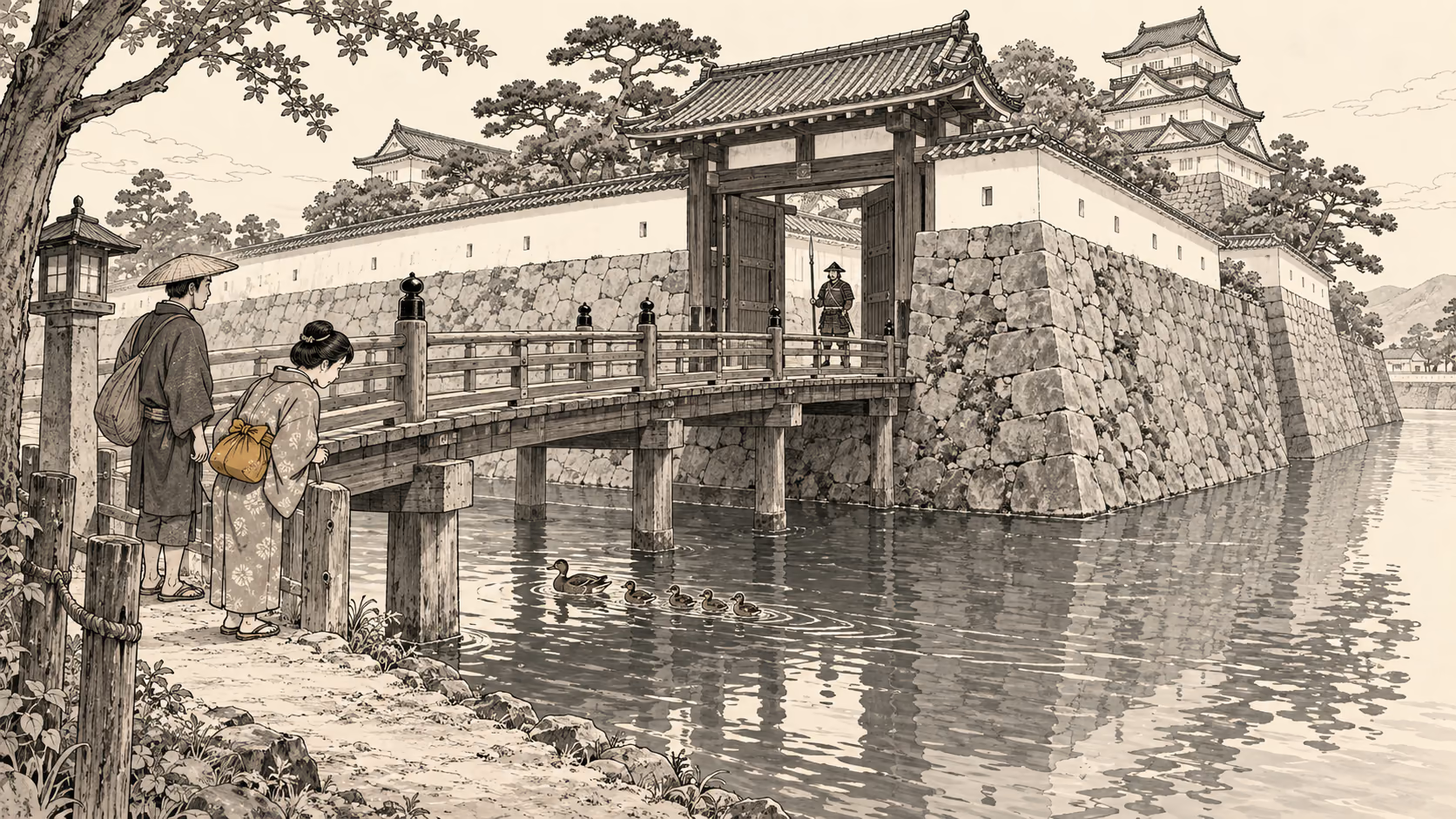
Illustration: A broad water-filled moat runs along the steep stone base of an Edo-period castle enclosure and continues around its visible corner. A narrow wooden bridge provides the only crossing from the outer bank to a guarded gate above the water.

Beyond N1nounLevel estimated by Bebop

濠ごう

gou

moat

濠 usually refers to a water-filled moat. Note written by AI.

Example sentences

  1. 巨大きょだいな前方後円墳ぜんぽうこうえんふんがその最古さいこの時期じきから周しゅう壕ごうを持もつことが分わかった。

    Therefore, it has become clear that the huge keyhole-shaped tumulus had a surrounding moat from, its earliest period.

    KFTT corpus (NICT), Wikipedia · CC BY-SA 3.0 · Source

  2. 周しゅう濠ごうを持もっていない。

    It is not surrounded by moat.

    KFTT corpus (NICT), Wikipedia · CC BY-SA 3.0 · Source

  3. 洪水こうずいにより環かん濠ごうが埋没まいぼつ。

    The circular moats were buried because of a flood.

    KFTT corpus (NICT), Wikipedia · CC BY-SA 3.0 · Source

Kanji in 濠

  • 濠moat; ditchOnゴウ・コウKunほり

A word like this on every new tab

The Bebop Chrome extension shows one illustrated Japanese word each time you open a new tab in Chrome, with its reading, meaning, kanji and three example sentences. Choose any mix of levels from N5 to beyond N1. It’s free, with no account.

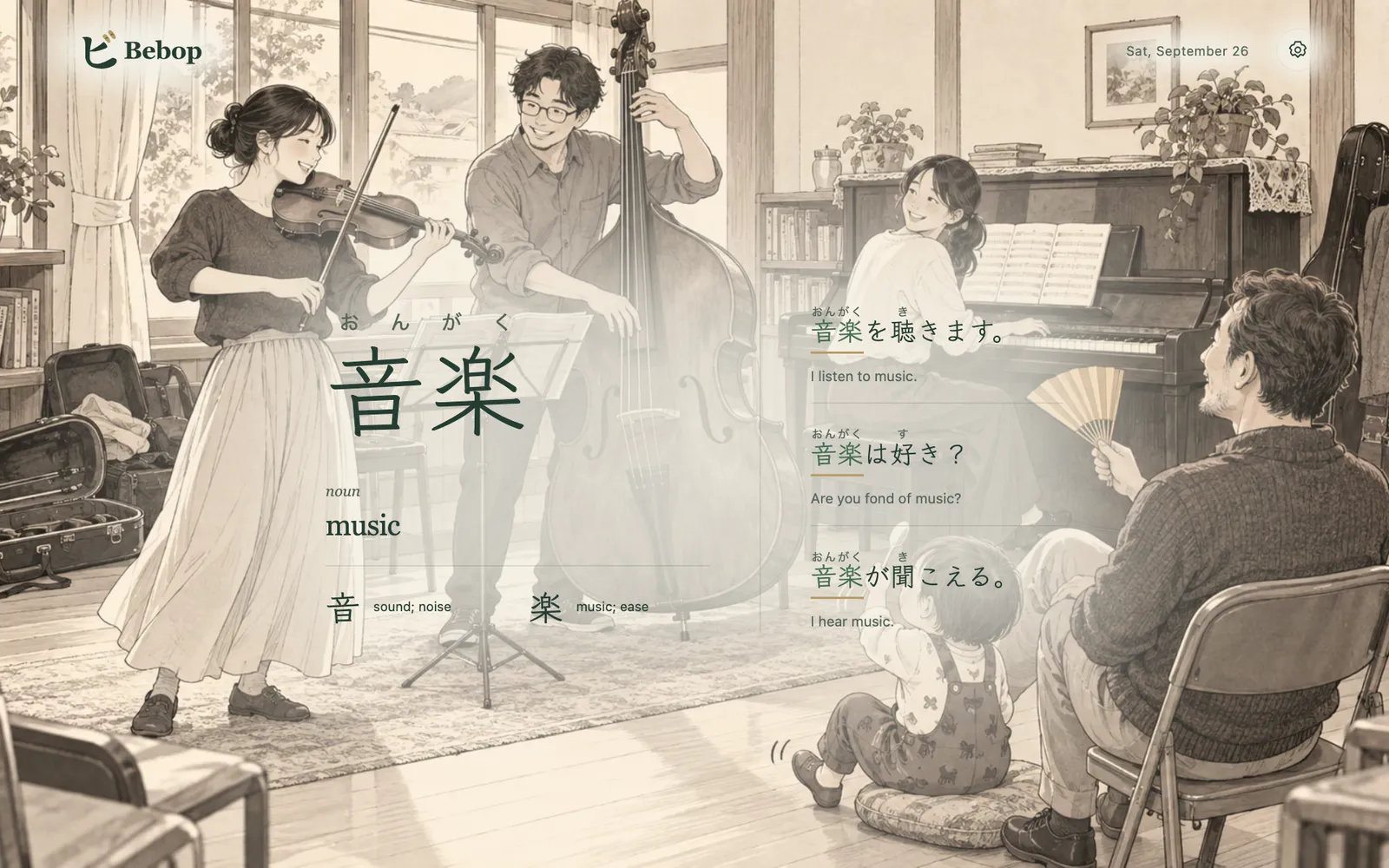
The Bebop new tab showing 音楽, music, over an illustration of a family playing music at home, with three example sentences
Add to Chrome Free on the Chrome Web Store
For Chrome on a computer. See it on the Chrome Web Store