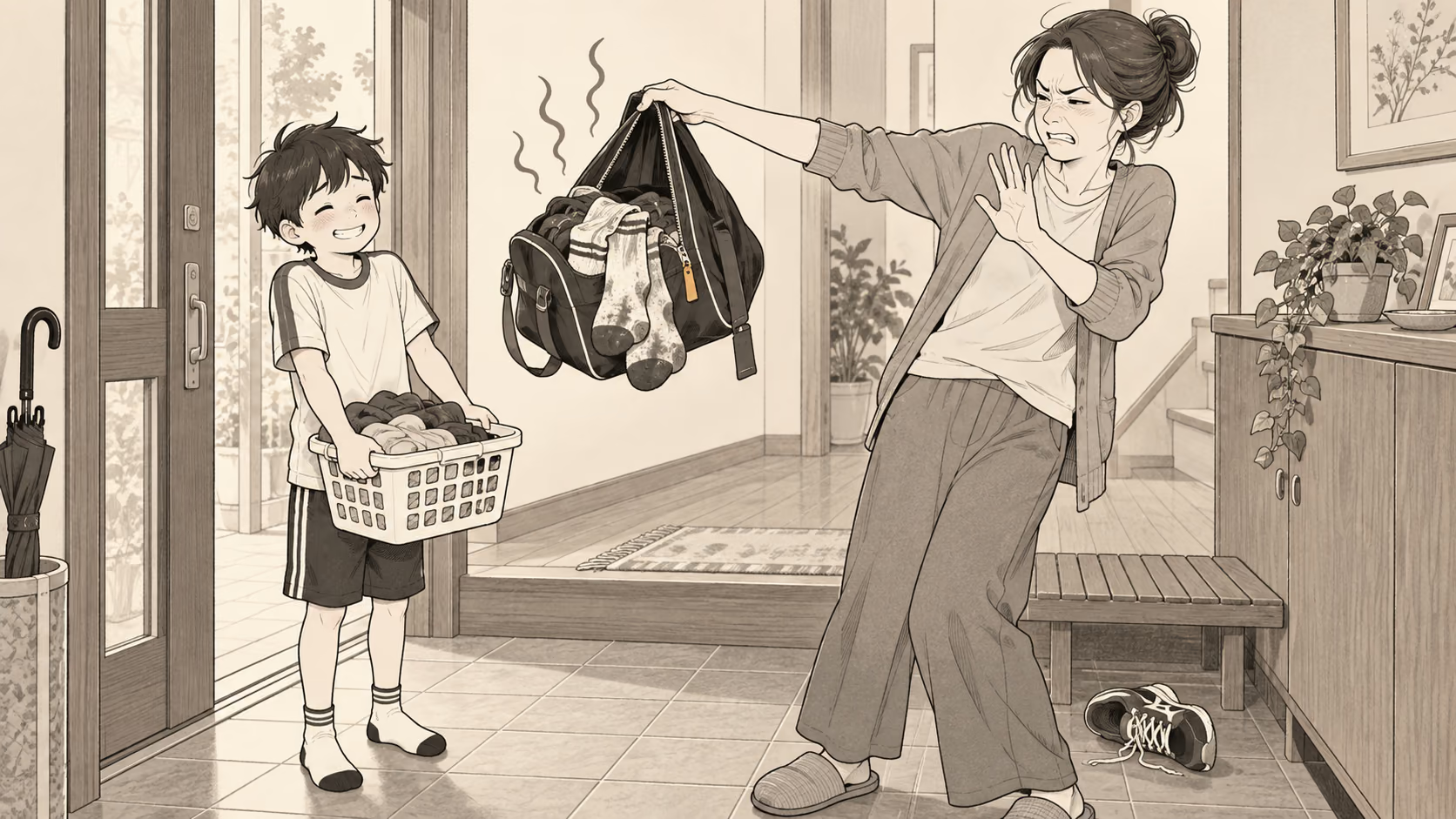
Illustration: In a family's entrance hall, an adult opens a child's sports bag and immediately leans away from the damp socks inside. Their nose wrinkles, shoulders pull back, and one hand rises palm outward in unmistakable aversion. They hold the bag at the greatest possible distance with the other hand.

JLPT N5na-adjectiveLevel estimated by Bebop

嫌いや

iya

unwilling, not wanting

嫌だ often means “I don’t want to.” Note written by AI.

Example sentences

  1. 彼かれの話はなし方かたが嫌いやなの。

    I don’t like his way of talking.

    Tatoeba · CC BY 2.0 FR · Source

  2. 一人ひとりはいやだ。

    I dislike being alone.

    Tatoeba · CC BY 2.0 FR · Source

  3. 待まつのは嫌いやだ。

    I don’t like waiting.

    Tatoeba · CC BY 2.0 FR · Source

Kanji in 嫌

  • 嫌dislike; detestOnケン・ゲンKunきらう・きらい・いや

A word like this on every new tab

The Bebop Chrome extension shows one illustrated Japanese word each time you open a new tab in Chrome, with its reading, meaning, kanji and three example sentences. Choose any mix of levels from N5 to beyond N1. It’s free, with no account.

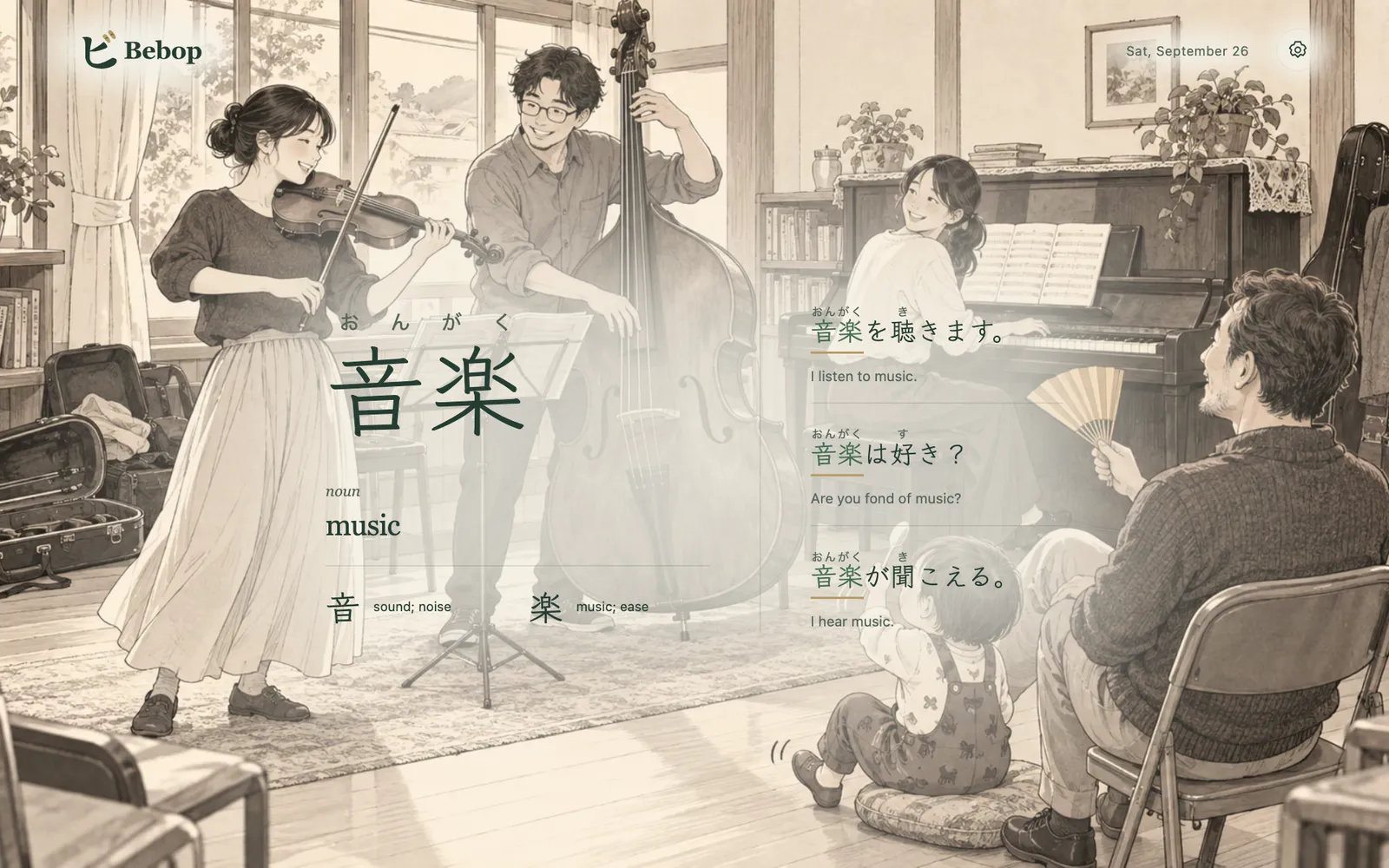
The Bebop new tab showing 音楽, music, over an illustration of a family playing music at home, with three example sentences
Add to Chrome Free on the Chrome Web Store
For Chrome on a computer. See it on the Chrome Web Store