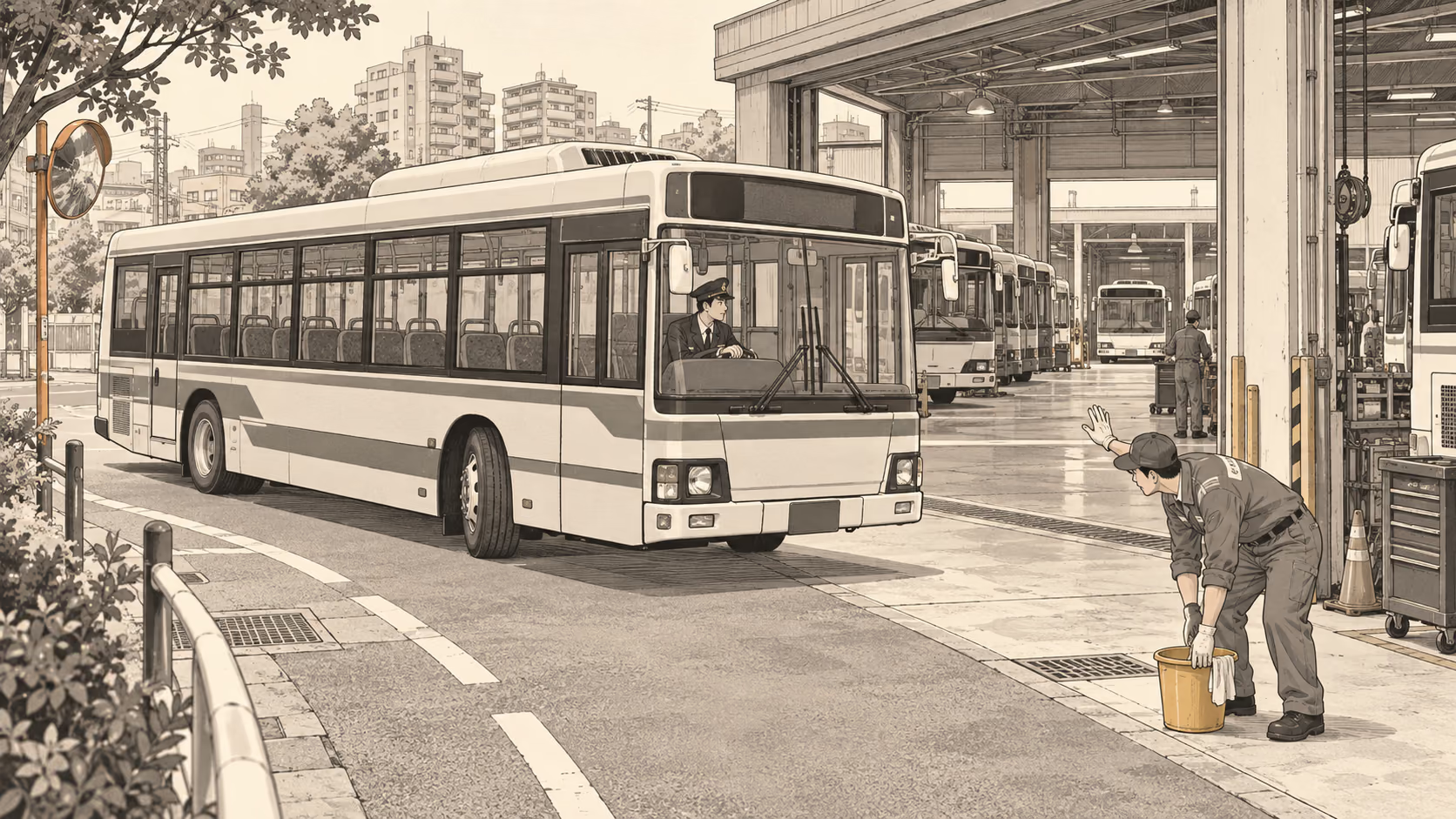
Illustration: A city bus turns slowly from a public road into a Japanese bus depot, driven by a uniformed driver but carrying no passengers. Its broad side windows reveal every seat empty, and its passenger doors remain closed.

JLPT N1suru verbLevel estimated by Bebop

回かい送そう

kaisou

to run out of service

Often shown on trains or buses carrying no passengers. Note written by AI.

Example sentences

  1. なお、想定外そうていがいの運転うんてんだったためか「回送かいそう」の行先板ゆきさきいたを付つけずに運転うんてんされた。

    The above train was operated without the 'Out of service' sign, since such operation wasn’t expected.

    KFTT corpus (NICT), Wikipedia · CC BY-SA 3.0 · Source

  2. 淀屋橋発よどやばしはつは2本ほんとも寝屋川車庫ねやがわしゃこから回送かいそう。

    Each of the two trains departing from Yodoyabashi was deadheaded from the Neyagawa depot.

    KFTT corpus (NICT), Wikipedia · CC BY-SA 3.0 · Source

  3. 淀屋橋発よどやばしはつ904は宇治到着後うじとうちゃくごに寝屋川車庫ねやがわしゃこに回送かいそう。

    The train departing from Yodoyabashi at 9:04 was deadheaded to the Neyagawa depot after arriving at Uji Station.

    KFTT corpus (NICT), Wikipedia · CC BY-SA 3.0 · Source

Kanji in 回送

  • 回-times; roundOnカイ・エKunまわる・まわす・まわし-
  • 送escort; sendOnソウKunおくる

A word like this on every new tab

The Bebop Chrome extension shows one illustrated Japanese word each time you open a new tab in Chrome, with its reading, meaning, kanji and three example sentences. Choose any mix of levels from N5 to beyond N1. It’s free, with no account.

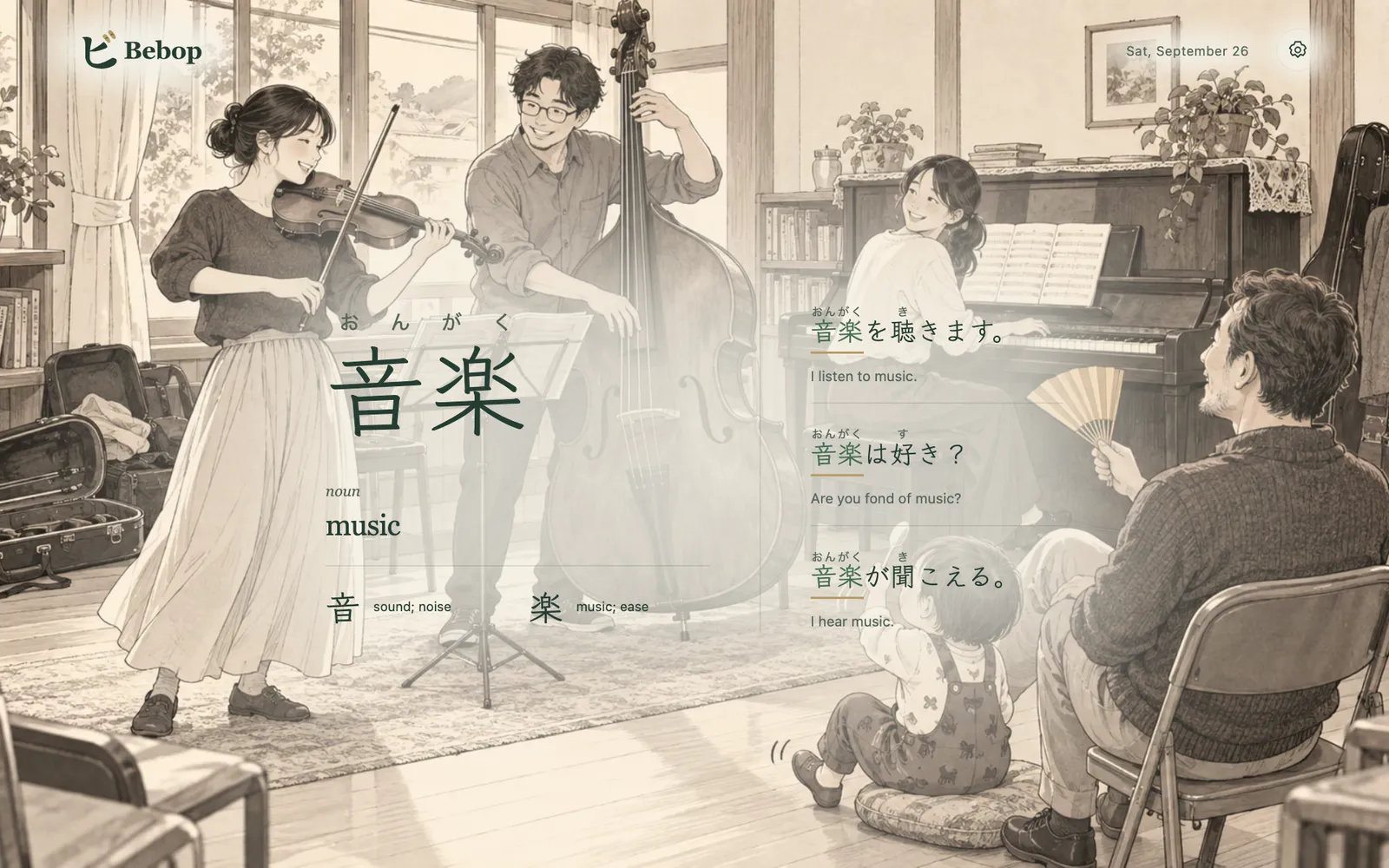
The Bebop new tab showing 音楽, music, over an illustration of a family playing music at home, with three example sentences
Add to Chrome Free on the Chrome Web Store
For Chrome on a computer. See it on the Chrome Web Store