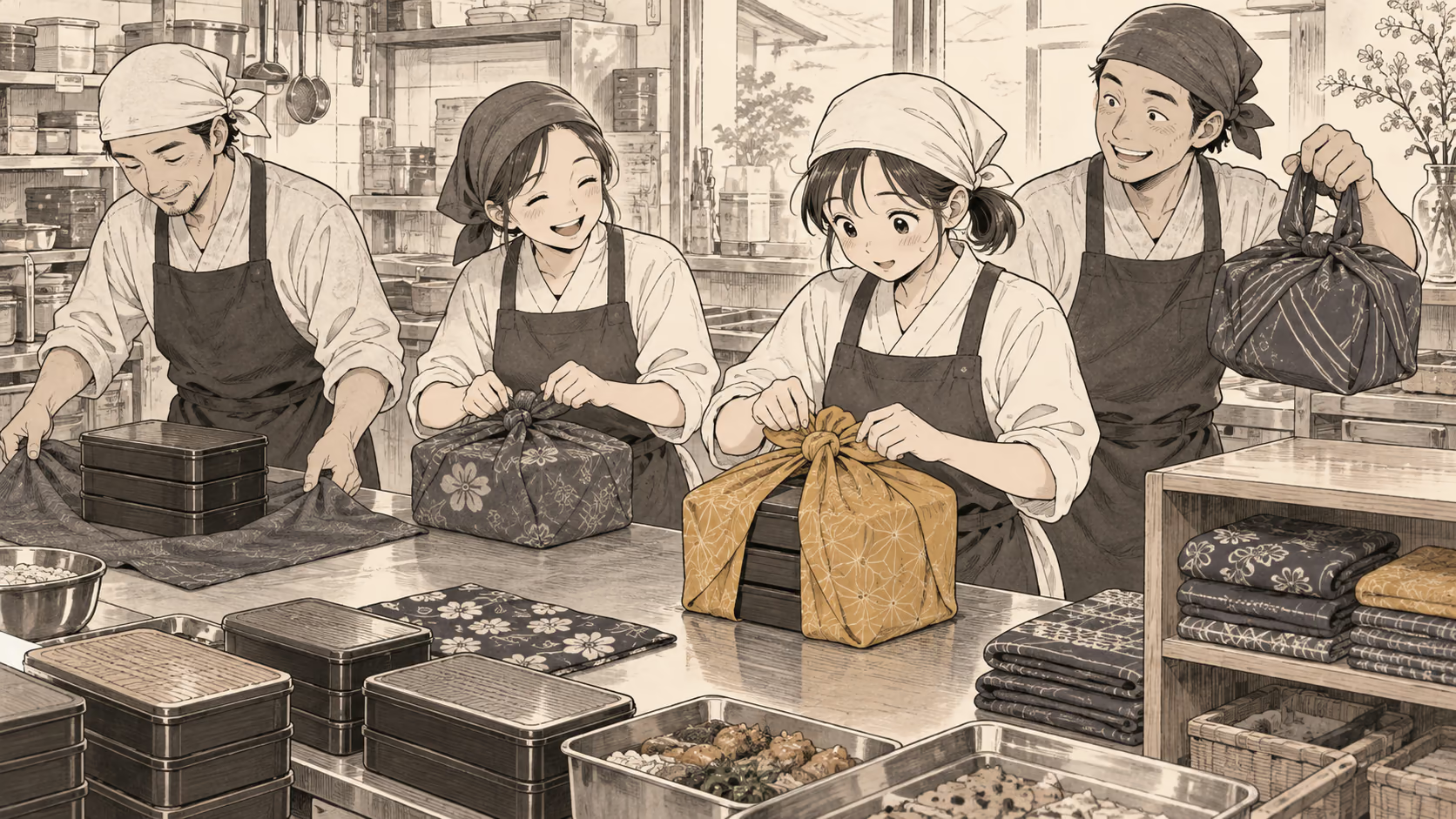
Illustration: At a small Japanese catering kitchen, three workers routinely use square wrapping cloths to carry stacks of reusable lunch boxes. One spreads a cloth beneath a stack, another ties the familiar knot over the top, and a third lifts a finished bundle by its knot.

JLPT N1nounLevel estimated by Bebop

慣かん用よう

kan'you

customary use

Most often seen in compounds such as 慣用句. Note written by AI.

Example sentences

  1. どうして英語えいごって、慣用かんよう句くや句動詞くどうしがこんなに多おおいの?

    Why does English have so many idioms and phrasal verbs?

    Tatoeba · CC BY 2.0 FR · Source

  2. これは現代英語げんだいえいごの慣用かんよう法ほうについての本ほんです。

    This is a book on modern English usage.

    Tatoeba · CC BY 2.0 FR · Source

  3. 慣用かんよう的てきに「あぶらげ」あるいは「あげ」と略りゃくされることもある。

    It is sometimes idiomatically called 'aburage' or 'age.'

    KFTT corpus (NICT), Wikipedia · CC BY-SA 3.0 · Source

Kanji in 慣用

  • 慣accustomed; get used toOnカンKunなれる・ならす
  • 用utilize; businessOnヨウKunもちいる

A word like this on every new tab

The Bebop Chrome extension shows one illustrated Japanese word each time you open a new tab in Chrome, with its reading, meaning, kanji and three example sentences. Choose any mix of levels from N5 to beyond N1. It’s free, with no account.

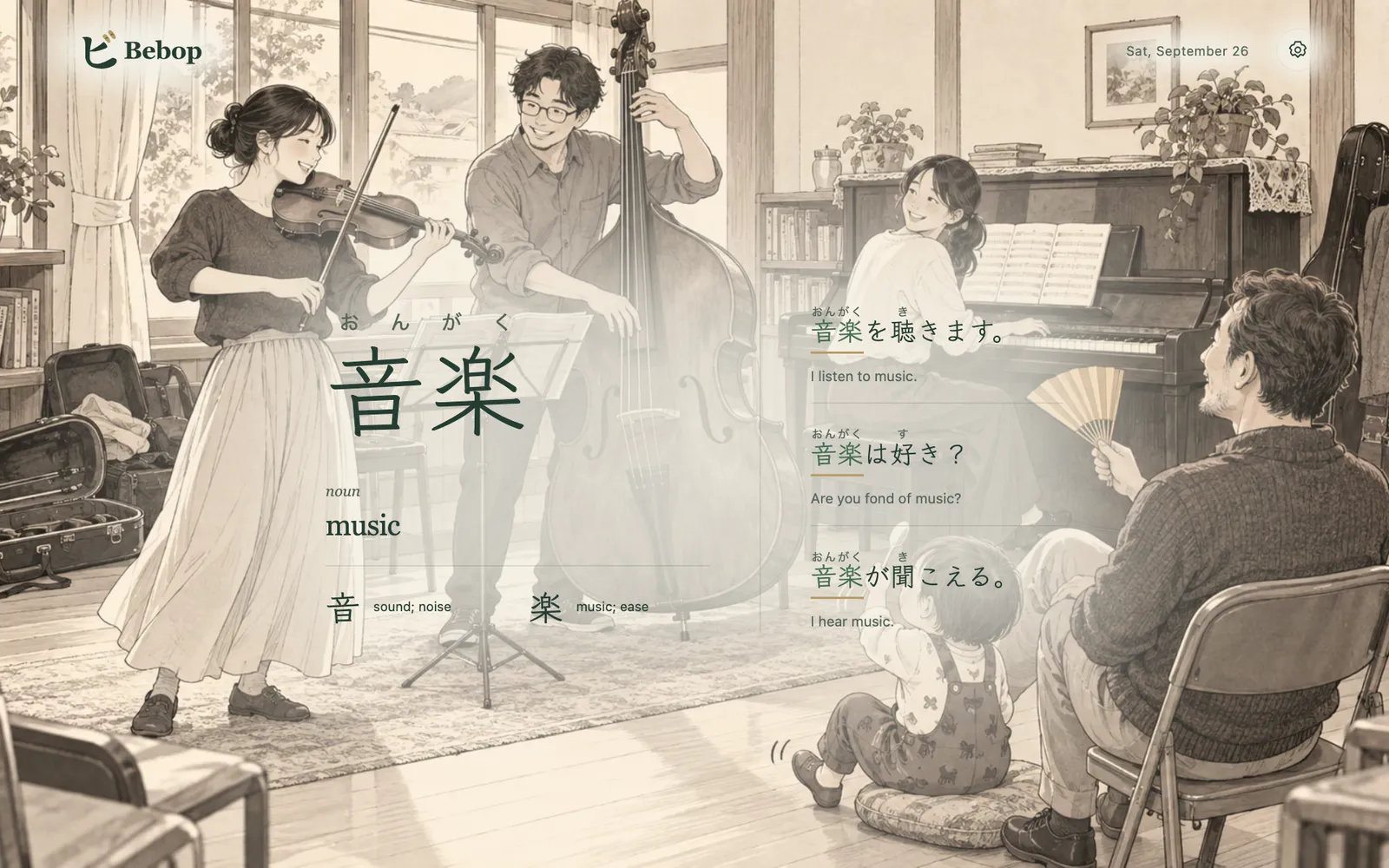
The Bebop new tab showing 音楽, music, over an illustration of a family playing music at home, with three example sentences
Add to Chrome Free on the Chrome Web Store
For Chrome on a computer. See it on the Chrome Web Store