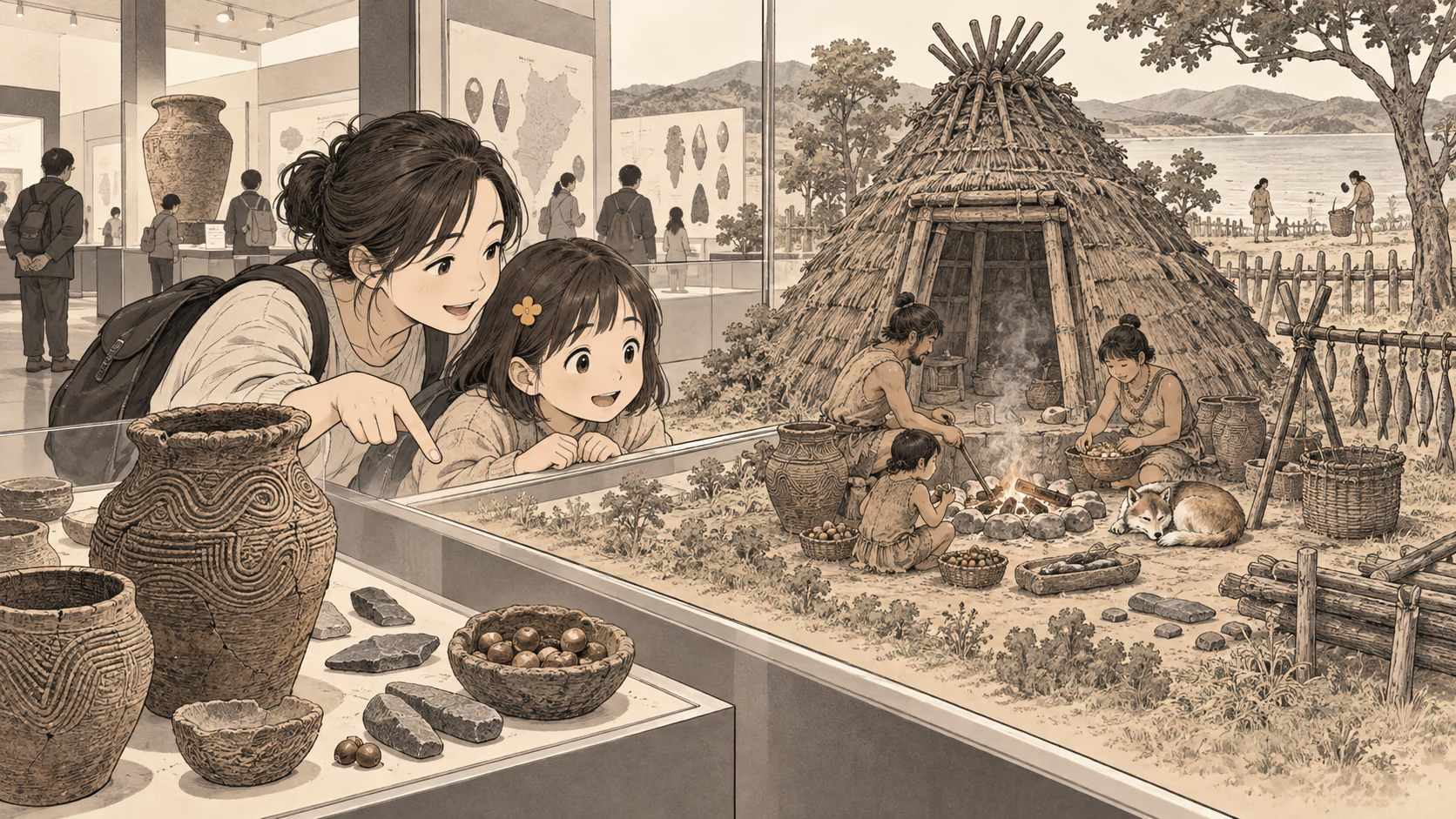
Illustration: Inside a contemporary Japanese archaeology museum, a child bends close to a glass case containing a reconstruction of a prehistoric Jōmon settlement. Tiny figures tend a hearth beside a pit dwelling, with cord-marked pottery, stone tools, and gathered nuts arranged around them.

JLPT N1nounLevel estimated by Bebop

紀き元げん前ぜん

kigenzen

BCE, BC

Example sentences

  1. それから、紀元前きげんぜん55年ねんにはローマ人じんが来きました。

    And then the Romans came in 55 B. C.

    Tatoeba · CC BY 2.0 FR · Source

  2. まずやって来きたのはケルト族ぞくで、紀元前きげんぜん600年ねんのことでした。

    First came the Celts in 600 B.C.

    Tatoeba · CC BY 2.0 FR · Source

  3. 最もっとも古ふるい中国ちゅうごくの箸はしの中なかには、紀元前きげんぜん1200年ねんにもさかのぼるものもある。

    Some of the oldest Chinese chopsticks date from 1200 B.C.

    Tatoeba · CC BY 2.0 FR · Source

Kanji in 紀元前

  • 紀chronicle; accountOnキ
  • 元beginning; former timeOnゲン・ガンKunもと
  • 前in front; beforeOnゼンKunまえ

A word like this on every new tab

The Bebop Chrome extension shows one illustrated Japanese word each time you open a new tab in Chrome, with its reading, meaning, kanji and three example sentences. Choose any mix of levels from N5 to beyond N1. It’s free, with no account.

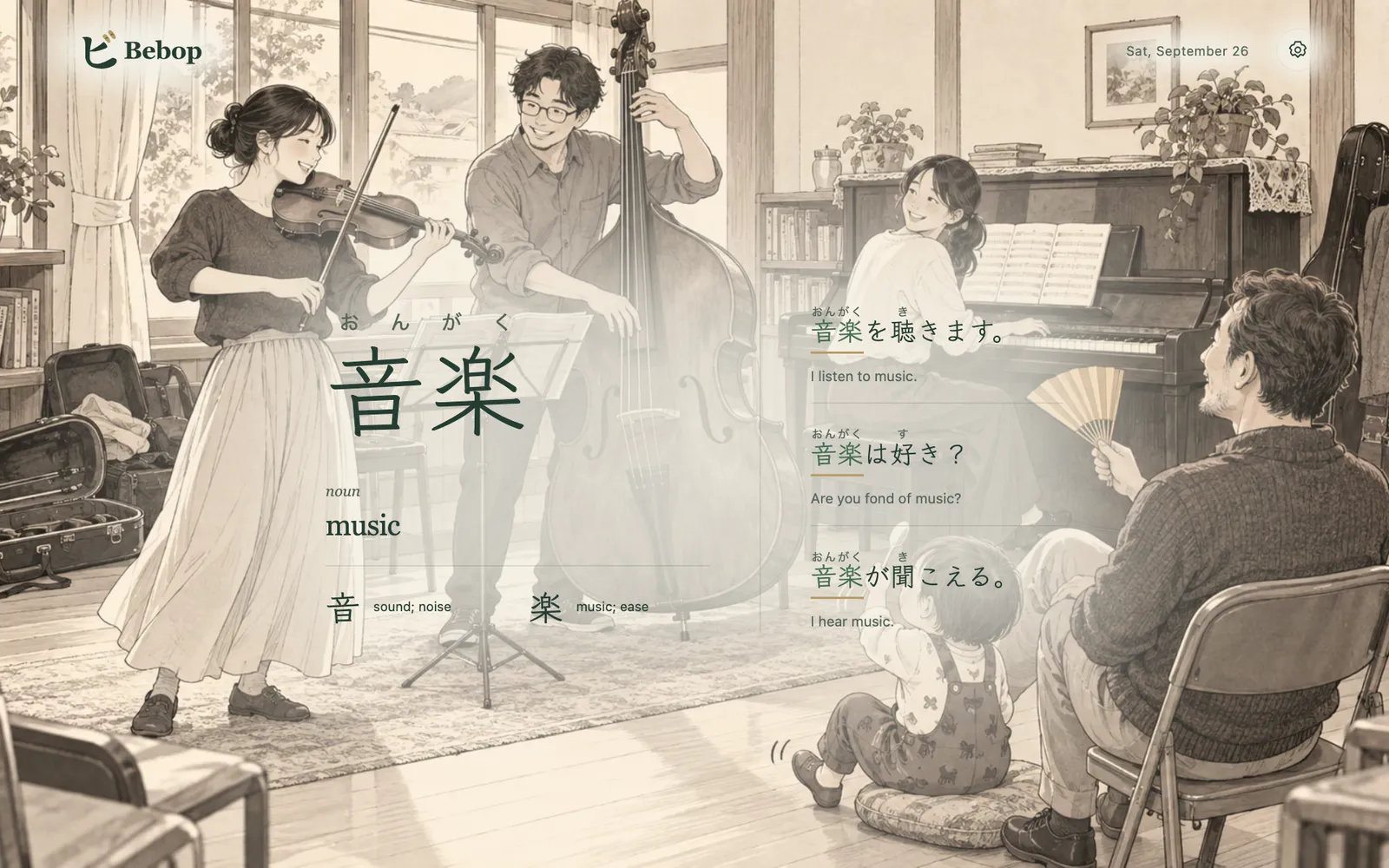
The Bebop new tab showing 音楽, music, over an illustration of a family playing music at home, with three example sentences
Add to Chrome Free on the Chrome Web Store
For Chrome on a computer. See it on the Chrome Web Store