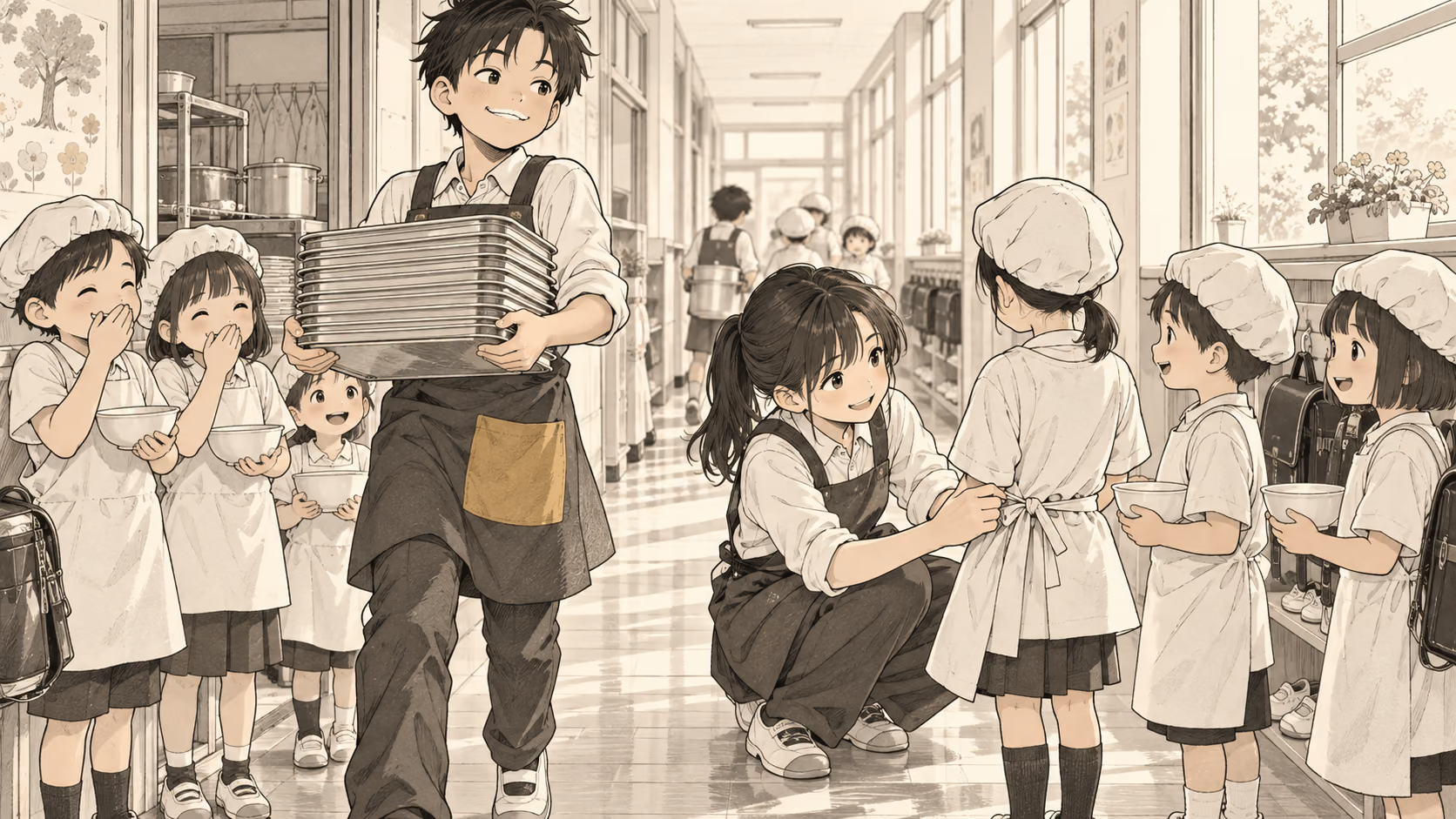
Illustration: In a Japanese elementary school corridor, two visibly older pupils around eleven or twelve help prepare a shared lunch activity. One confidently carries a stack of trays while the other crouches to retie a much younger pupil's loose apron strings.

JLPT N2nounLevel estimated by Bebop

高こう学がく年ねん

kougakunen

upper elementary school grades

Usually the fifth and sixth grades. Note written by AI.

Example sentences

  1. 妹いもうとは来年らいねんから高学年こうがくねんになる。

    My younger sister will be in the upper elementary grades next year.

    Written by AI for Bebop

  2. この本ほんは小学校しょうがっこうの高学年こうがくねん向むけです。

    This book is for children in the upper elementary grades.

    Written by AI for Bebop

  3. 運動会うんどうかいでは高学年こうがくねんが準備じゅんびを手伝てつだった。

    The older elementary school students helped prepare for sports day.

    Written by AI for Bebop

Kanji in 高学年

  • 高tall; highOnコウKunたかい・たか・たかまる
  • 学study; learningOnガクKunまなぶ
  • 年year; counter for yearsOnネンKunとし

A word like this on every new tab

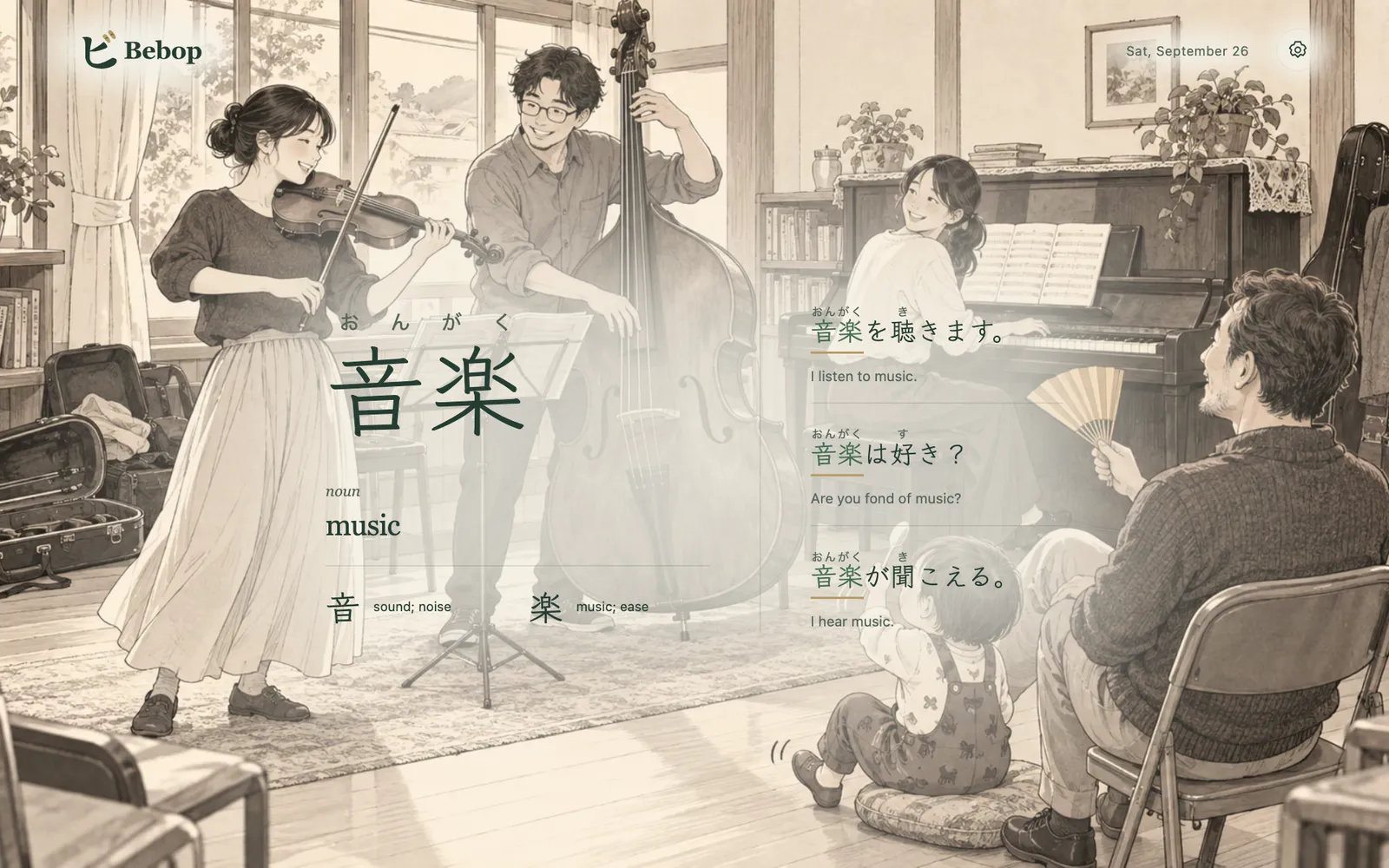
The Bebop Chrome extension shows one illustrated Japanese word each time you open a new tab in Chrome, with its reading, meaning, kanji and three example sentences. Choose any mix of levels from N5 to beyond N1. It’s free, with no account.

The Bebop new tab showing 音楽, music, over an illustration of a family playing music at home, with three example sentences
Add to Chrome Free on the Chrome Web Store
For Chrome on a computer. See it on the Chrome Web Store