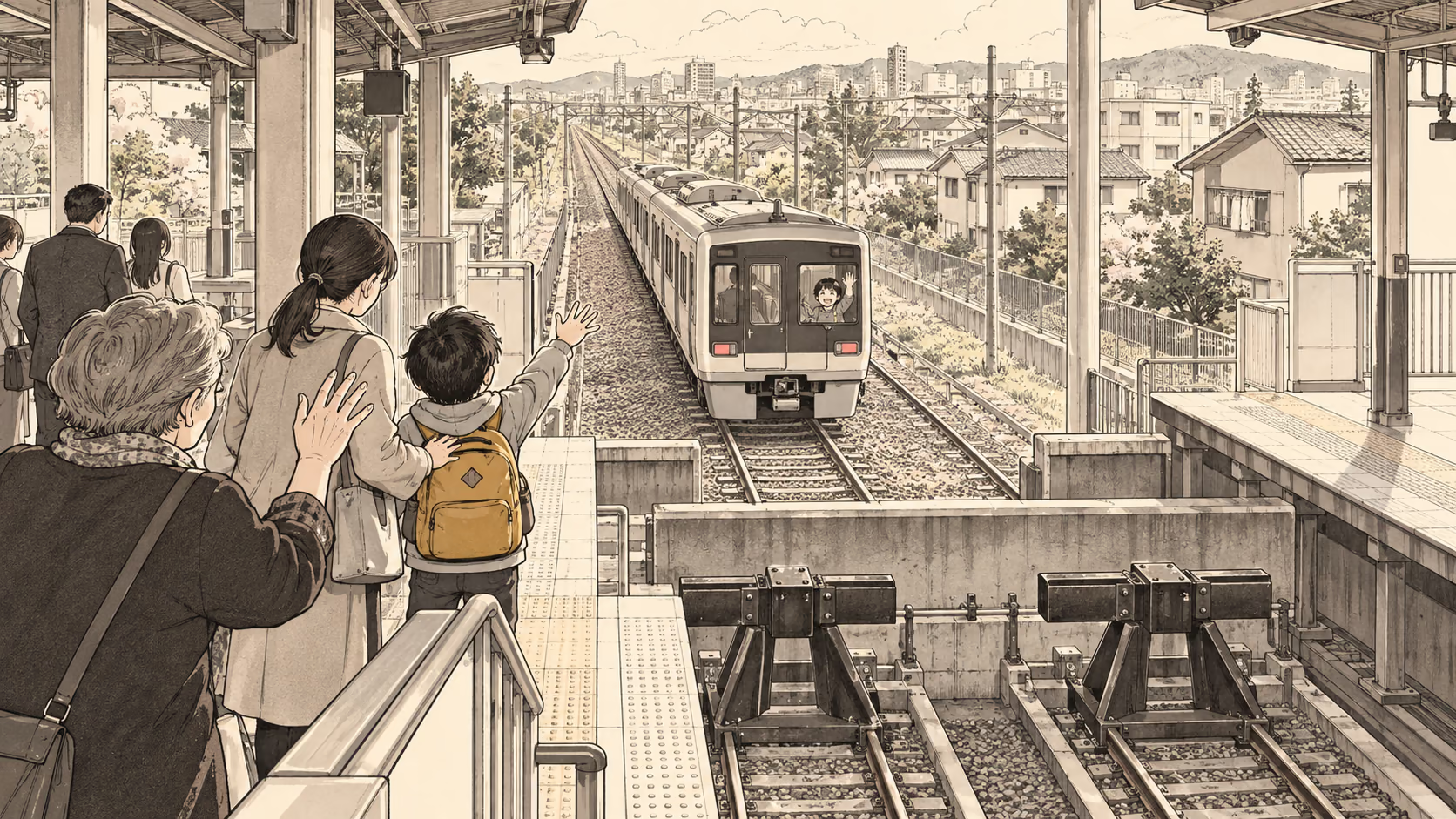
Illustration: Viewed from above a Japanese terminal's platform ends, a commuter train moves outward along level tracks toward low residential buildings. Behind its rear cab, the rails visibly terminate at buffer stops beneath the terminal roof, making the route's starting end clear.

JLPT N3nounLevel estimated by Bebop

下くだり

kudari

outbound train

A train heading toward the end of its route. Note written by AI.

Example sentences

  1. 現在げんざいは上のぼり・下くだり1本ほんずつでともに午後ごごの運行うんこう。

    Currently, Monju has only one inbound/outbound train service, which runs in the afternoon.

    KFTT corpus (NICT), Wikipedia · CC BY-SA 3.0 · Source

  2. 運転開始当初うんてんかいしとうしょは下くだり1本ほん、上のぼり2本ほんで運転うんてん。

    When its operation was launched, the daily service comprised of one outbound train and two inbound trains.

    KFTT corpus (NICT), Wikipedia · CC BY-SA 3.0 · Source

  3. 吹田信号場すいたしんごうじょうへ向むかう下くだり列車れっしゃは1日にち8本停車ほんていしゃする。

    Each day, eight outbound trains for Suita Signal Station stop at Umekoji Station.

    KFTT corpus (NICT), Wikipedia · CC BY-SA 3.0 · Source

Kanji in 下

  • 下below; downOnカ・ゲKunした・しも・くだる

A word like this on every new tab

The Bebop Chrome extension shows one illustrated Japanese word each time you open a new tab in Chrome, with its reading, meaning, kanji and three example sentences. Choose any mix of levels from N5 to beyond N1. It’s free, with no account.

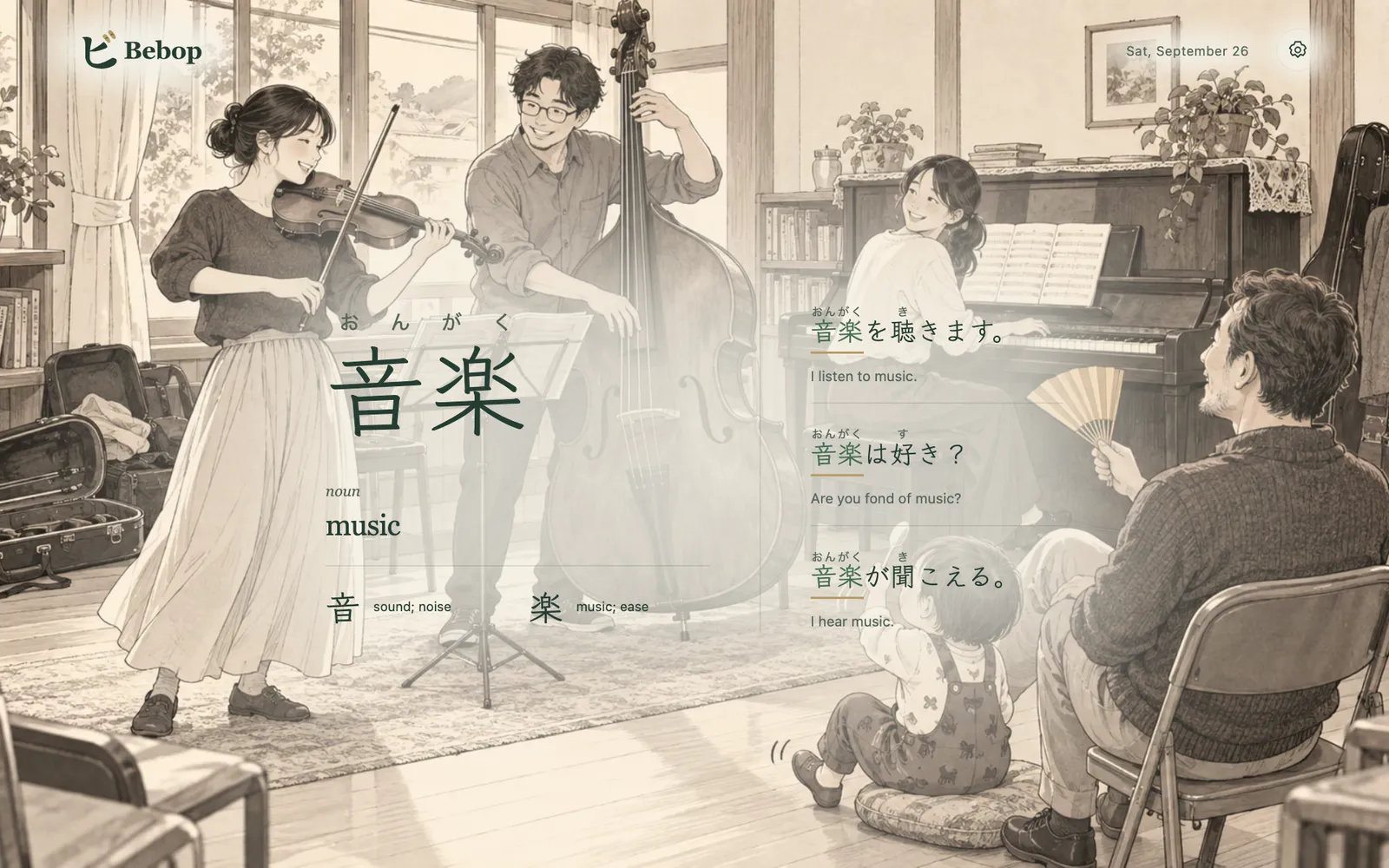
The Bebop new tab showing 音楽, music, over an illustration of a family playing music at home, with three example sentences
Add to Chrome Free on the Chrome Web Store
For Chrome on a computer. See it on the Chrome Web Store