Illustration: At a kitchen table, a parent sits beside a schoolchild with an open Japanese workbook turned toward them. The book is viewed from behind at a shallow angle, so its printed content is concealed.

JLPT N2nounLevel estimated by Bebop

送おくり仮名がな

okurigana

kana ending after a kanji

Example sentences

  1. 奈良時代ならじだい、天皇てんのうの命令めいれいを記しるした宣命せんみょうという文書ぶんしょでは「送おくりがな」や「てにをは」を漢字かんじの音おんを借かりて小ちいさく書かき入いれている。

    In Nara-period documents called senmyō, which recorded imperial orders, kana endings and particles such as te, ni, o, and wa were written in small characters using kanji for their sounds.

    KFTT corpus (NICT), Wikipedia · CC BY-SA 3.0 · Source

  2. なお、正式せいしきな通とおりの名称めいしょうの場合ばあい「通つう」に送おくり仮名がなは付ふさない。

    The official street name is not described with okurikana following the Chinese Character '通.'

    KFTT corpus (NICT), Wikipedia · CC BY-SA 3.0 · Source

  3. しかしながら道路標識どうろひょうしきにおいては専もっぱら送おくり仮名がなが付つけられている。

    However, the names with okurigana are often found on traffic signs.

    KFTT corpus (NICT), Wikipedia · CC BY-SA 3.0 · Source

Kanji in 送仮名

  • 送escort; sendOnソウKunおくる
  • 仮sham; temporaryOnカ・ケKunかり・かり-
  • 名name; notedOnメイ・ミョウKunな

A word like this on every new tab

The Bebop Chrome extension shows one illustrated Japanese word each time you open a new tab in Chrome, with its reading, meaning, kanji and three example sentences. Choose any mix of levels from N5 to beyond N1. It’s free, with no account.

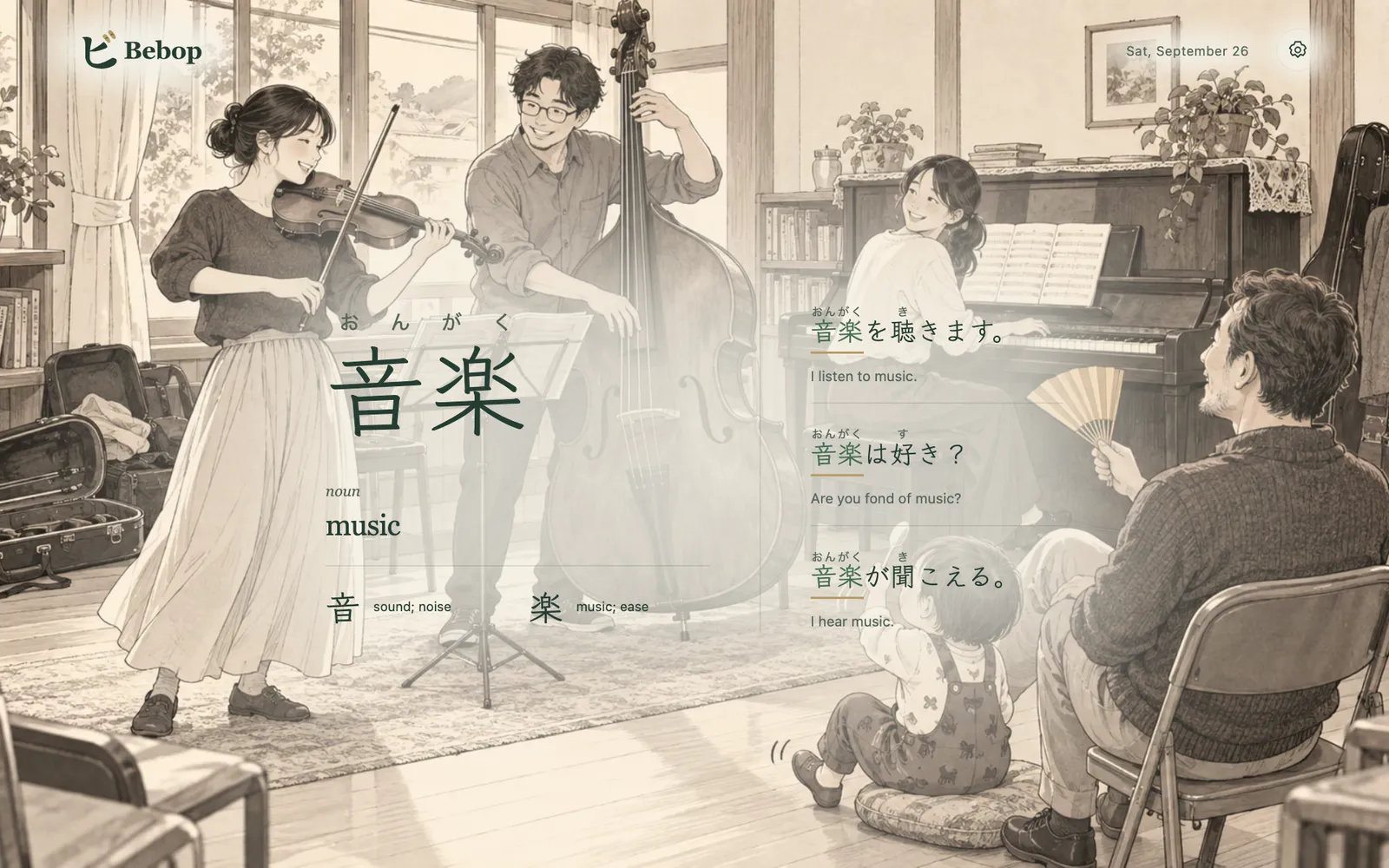
The Bebop new tab showing 音楽, music, over an illustration of a family playing music at home, with three example sentences
Add to Chrome Free on the Chrome Web Store
For Chrome on a computer. See it on the Chrome Web Store