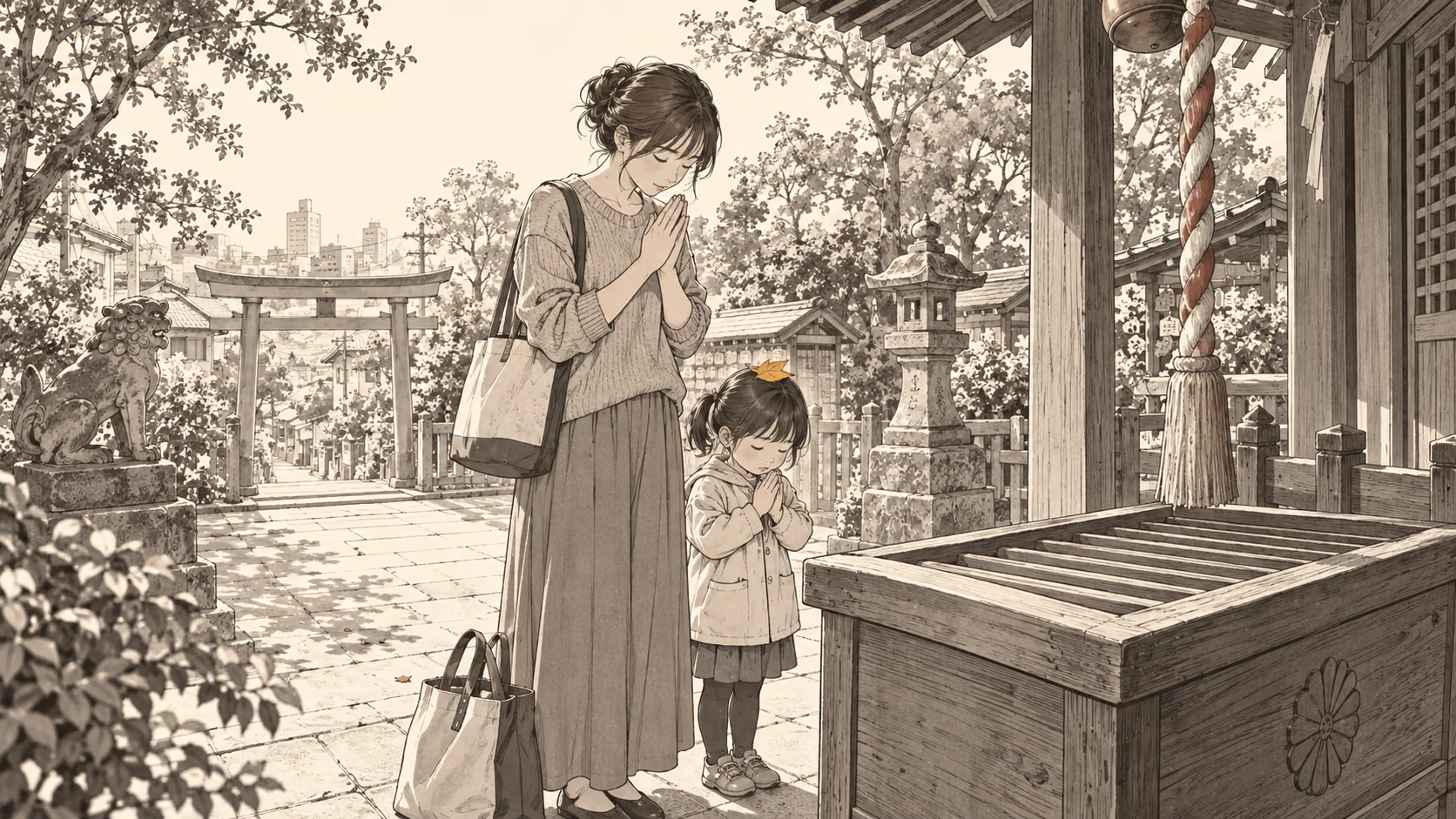
Illustration: At a small neighborhood Shinto shrine, a woman stands before the wooden offering box with her hands joined and her head gently lowered in prayer. Her shopping tote rests by her feet, suggesting a visit during an ordinary day.

JLPT N2nounLevel estimated by Bebop

お参まいり

omairi

visit to a shrine or grave

Example sentences

  1. 元旦がんたんには近所きんじょの神社じんじゃにお参まいりする人ひとが多おおい。

    On New Year’s Day, many people visit neighborhood shrines.

    Tatoeba · CC BY 2.0 FR · Source

  2. 1月いちがつ1日ついたちは多おおくの日本人にっぽんじんが神社じんじゃにお参まいりする日ひです。

    January 1st is the day when many Japanese go to shrines.

    Tatoeba · CC BY 2.0 FR · Source

  3. お参まいりをするときは線香せんこうは立たてず、榊さかき・米こめ・塩しお・水みず・酒等さけなどを供そなえる。

    When visiting to worship, people offer sakaki branches, rice, salt, water, sake, and other offerings instead of lighting incense.

    KFTT corpus (NICT), Wikipedia · CC BY-SA 3.0 · Source

Kanji in 参

  • 参nonplussed; three (in documents)Onサン・シンKunまいる・まい-・まじわる
A word like this on every new tab

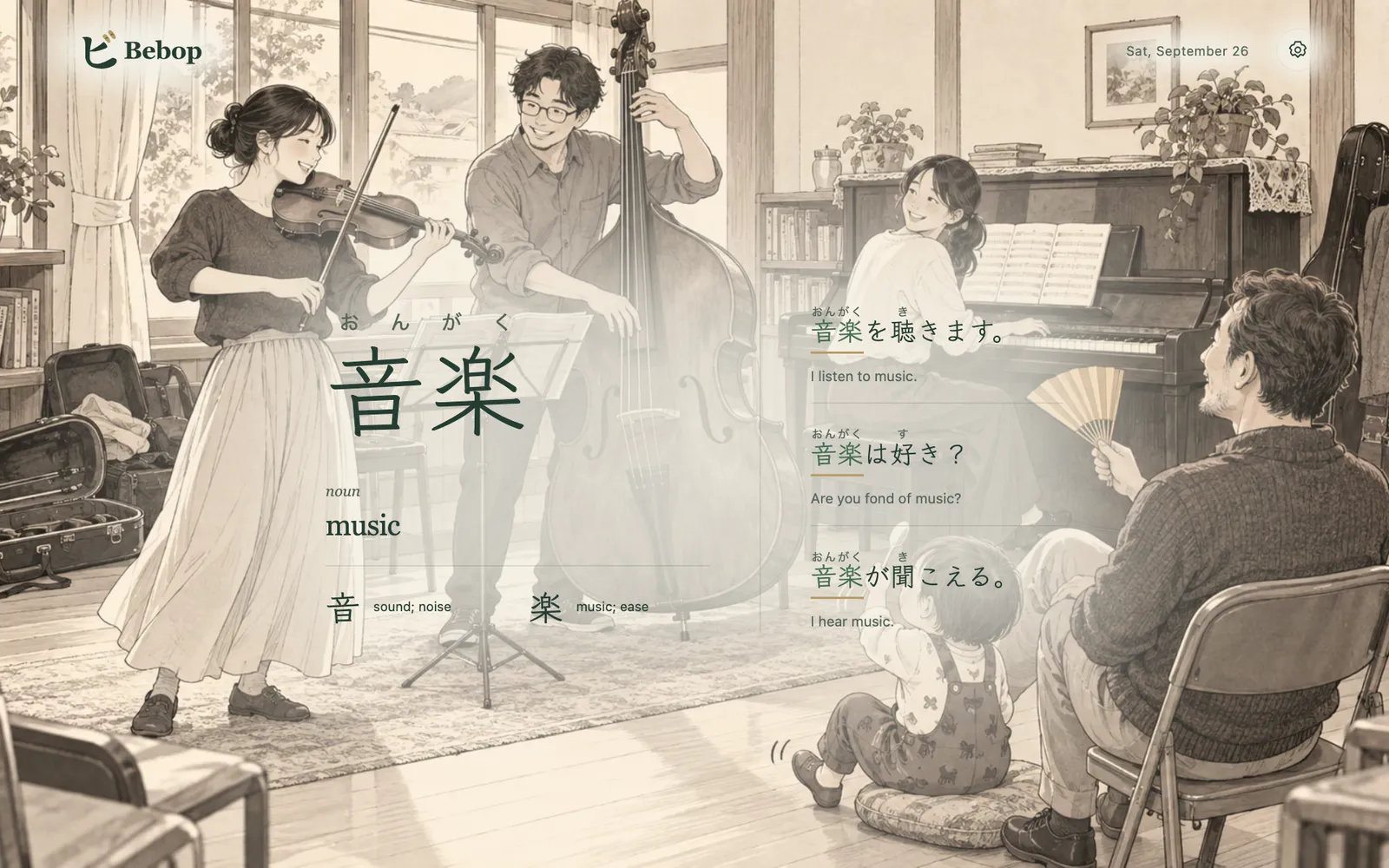
The Bebop Chrome extension shows one illustrated Japanese word each time you open a new tab in Chrome, with its reading, meaning, kanji and three example sentences. Choose any mix of levels from N5 to beyond N1. It’s free, with no account.

The Bebop new tab showing 音楽, music, over an illustration of a family playing music at home, with three example sentences
Add to Chrome Free on the Chrome Web Store
For Chrome on a computer. See it on the Chrome Web Store