Illustration: At a Japanese apartment kitchen counter, an adult has just tasted a fresh lemon wedge. Their lips purse tightly, one eye squeezes shut, and their shoulders rise in an involuntary response.

JLPT N1no-adjectiveLevel estimated by Bebop

酸さん味み

sanmi

sourness, acidity

Example sentences

  1. パイナップルを食たべるのって、好すきじゃないのよね。酸味さんみが強つよいでしょ。

    I don’t like eating pineapples. They have a noticeably sour taste.

    Tatoeba · CC BY 2.0 FR · Source

  2. この酸味さんみはレモンなどの柑橘類かんきつるいに多おおく含ふくまれるクエン酸さんに由来ゆらいする。

    This acidity comes from citric acid, which is found in large quantities in citrus fruits such as lemons.

    KFTT corpus (NICT), Wikipedia · CC BY-SA 3.0 · Source

  3. 熟じゅくしたユズでも酸味さんみが非常ひじょうに強つよいため、普通ふつうは直接食用ちょくせつしょくようとすることはない。

    The ripened yuzu citron still has a strong, sour taste, so it’s usually not directly edible.

    KFTT corpus (NICT), Wikipedia · CC BY-SA 3.0 · Source

Kanji in 酸味

  • 酸acid; bitternessOnサンKunすい
  • 味flavor; tasteOnミKunあじ・あじわう

A word like this on every new tab

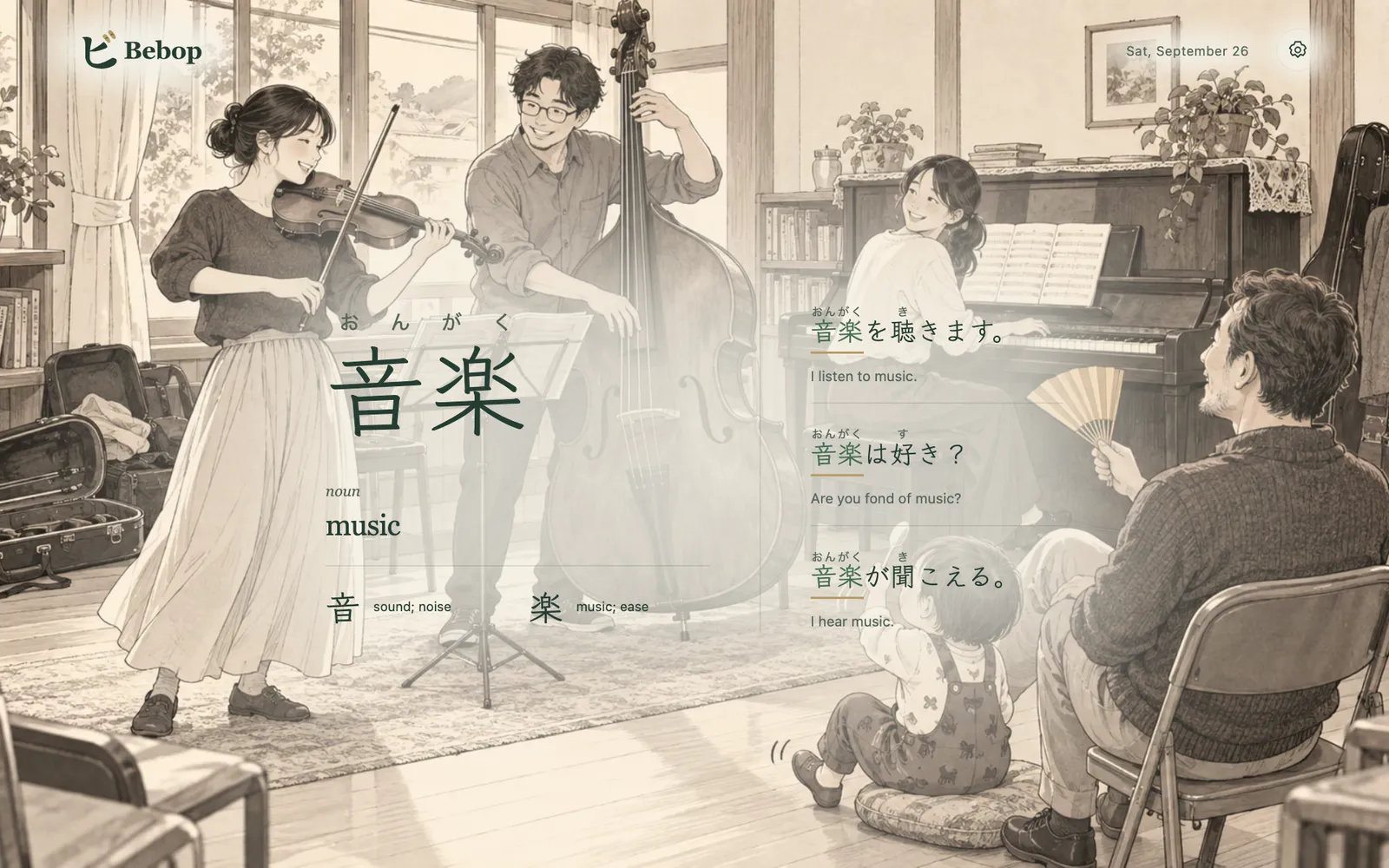
The Bebop Chrome extension shows one illustrated Japanese word each time you open a new tab in Chrome, with its reading, meaning, kanji and three example sentences. Choose any mix of levels from N5 to beyond N1. It’s free, with no account.

The Bebop new tab showing 音楽, music, over an illustration of a family playing music at home, with three example sentences
Add to Chrome Free on the Chrome Web Store
For Chrome on a computer. See it on the Chrome Web Store