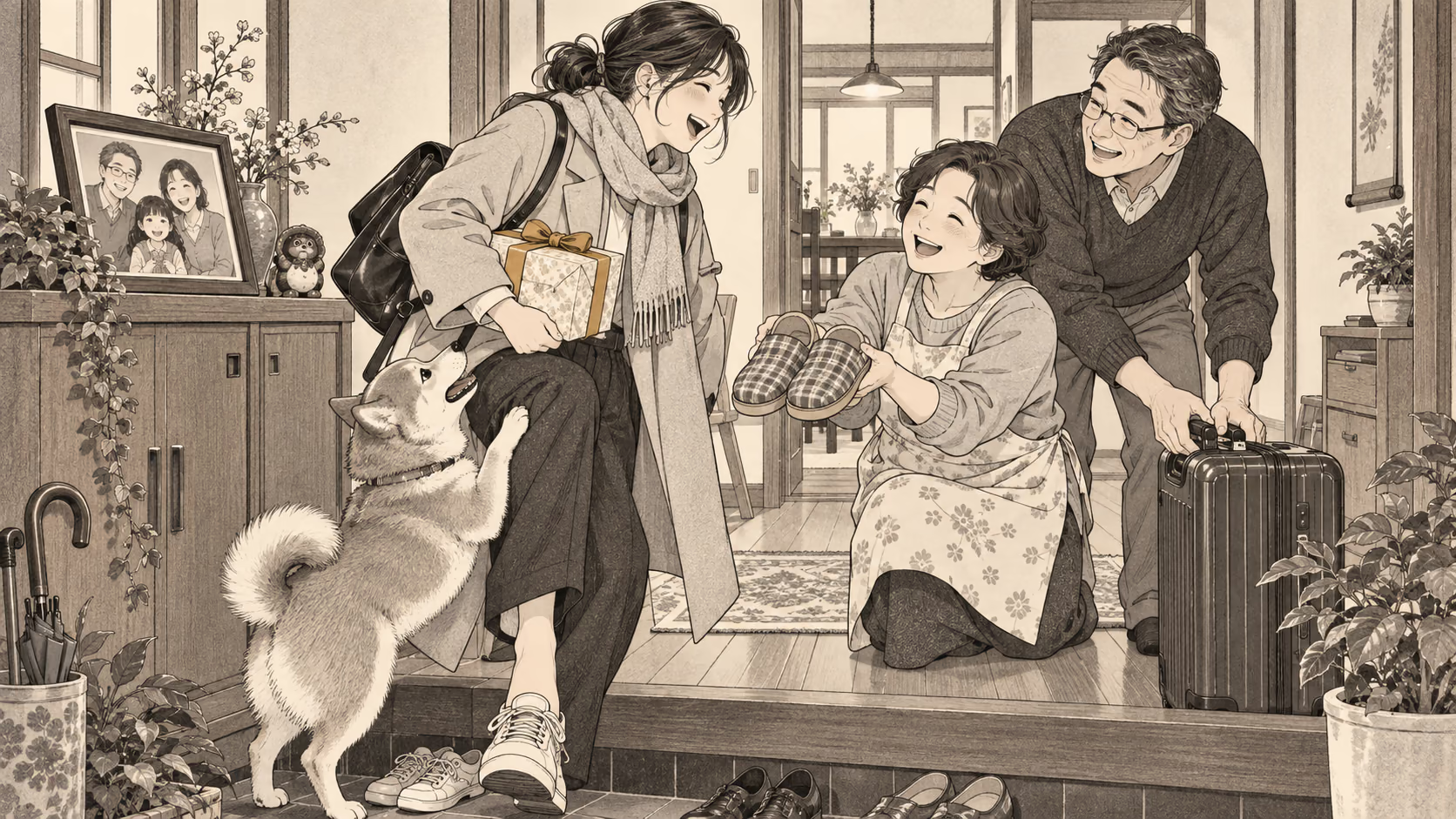
Illustration: At the entrance of a modest Japanese house, a married adult arrives with a small suitcase and a gift parcel while their parents eagerly welcome them inside. A framed childhood photograph on the shoe cabinet clearly shows the same visitor standing between these parents years earlier.

JLPT N1suru verbLevel estimated by Bebop

里さと帰がえり

satogaeri

returning to one’s parents' home

Traditionally used of a married person visiting their parents. Note written by AI.

Example sentences

  1. また彼女かのじょらの里帰さとがえりを通とおして庶民しょみんにも伝つたえられた。

    This spread to commoners when these women went back to their parental homes.

    KFTT corpus (NICT), Wikipedia · CC BY-SA 3.0 · Source

  2. さながら懐なつかしい実家じっかに里帰さとがえりする雰囲気ふんいきで撮とられた。

    The interview was recorded in a friendly atmosphere as if Otani had visited her home to see her parents.

    KFTT corpus (NICT), Wikipedia · CC BY-SA 3.0 · Source

  3. 夏なつになると紫むらさきの上うえの容態ようだいはいっそう重おもくなり、明石あかしの姫君ひめぎみも義母ぎぼの見舞みまいのため里帰さとがえりしてくる。

    When it is summer, Murasaki no ue’s condition gets worse and young Lady Akashi visits her old home to see her adoptive mother.

    KFTT corpus (NICT), Wikipedia · CC BY-SA 3.0 · Source

Kanji in 里帰

  • 里ri; villageOnリKunさと
  • 帰return homeOnキKunかえる・かえす・おくる

A word like this on every new tab

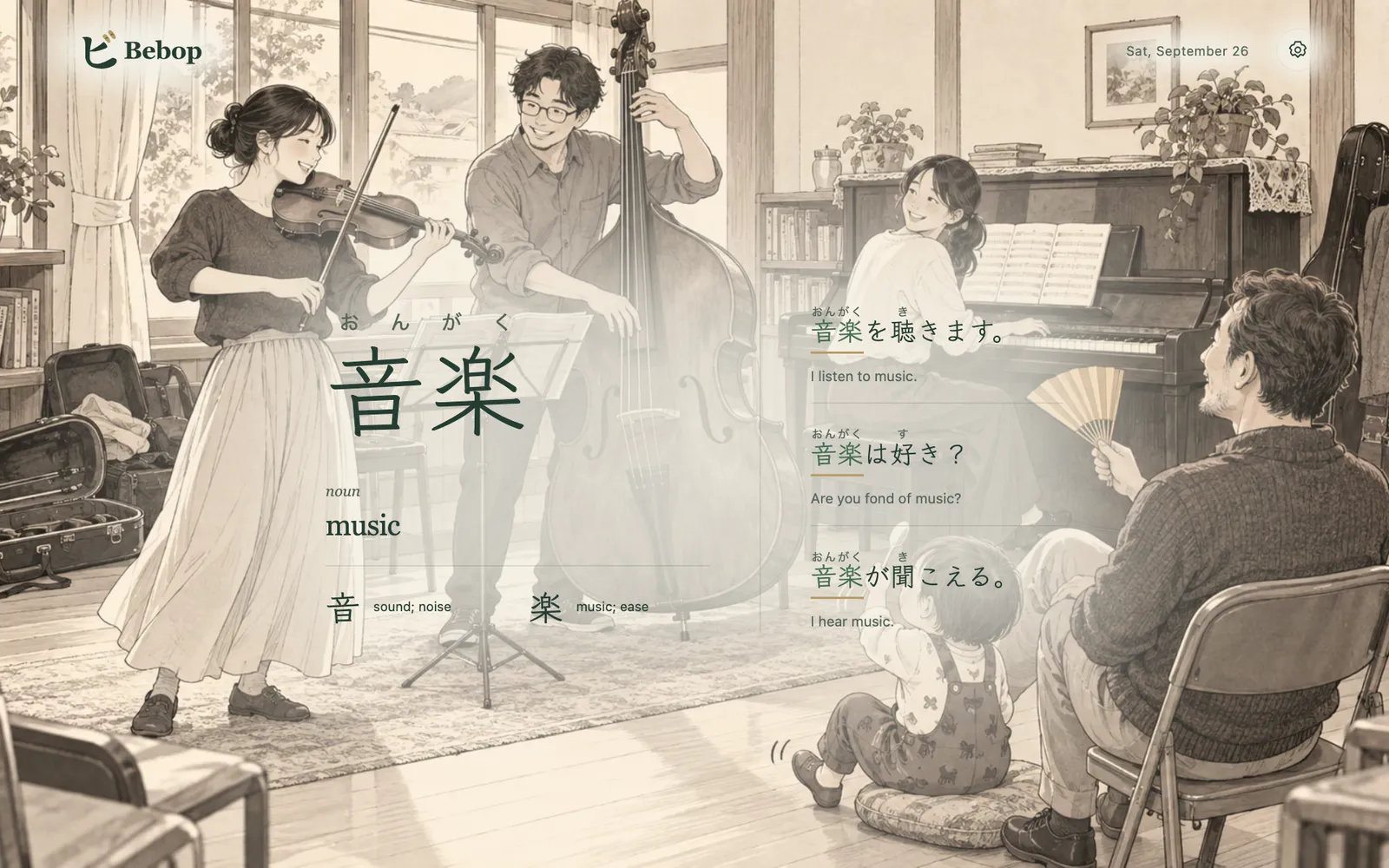
The Bebop Chrome extension shows one illustrated Japanese word each time you open a new tab in Chrome, with its reading, meaning, kanji and three example sentences. Choose any mix of levels from N5 to beyond N1. It’s free, with no account.

The Bebop new tab showing 音楽, music, over an illustration of a family playing music at home, with three example sentences
Add to Chrome Free on the Chrome Web Store
For Chrome on a computer. See it on the Chrome Web Store