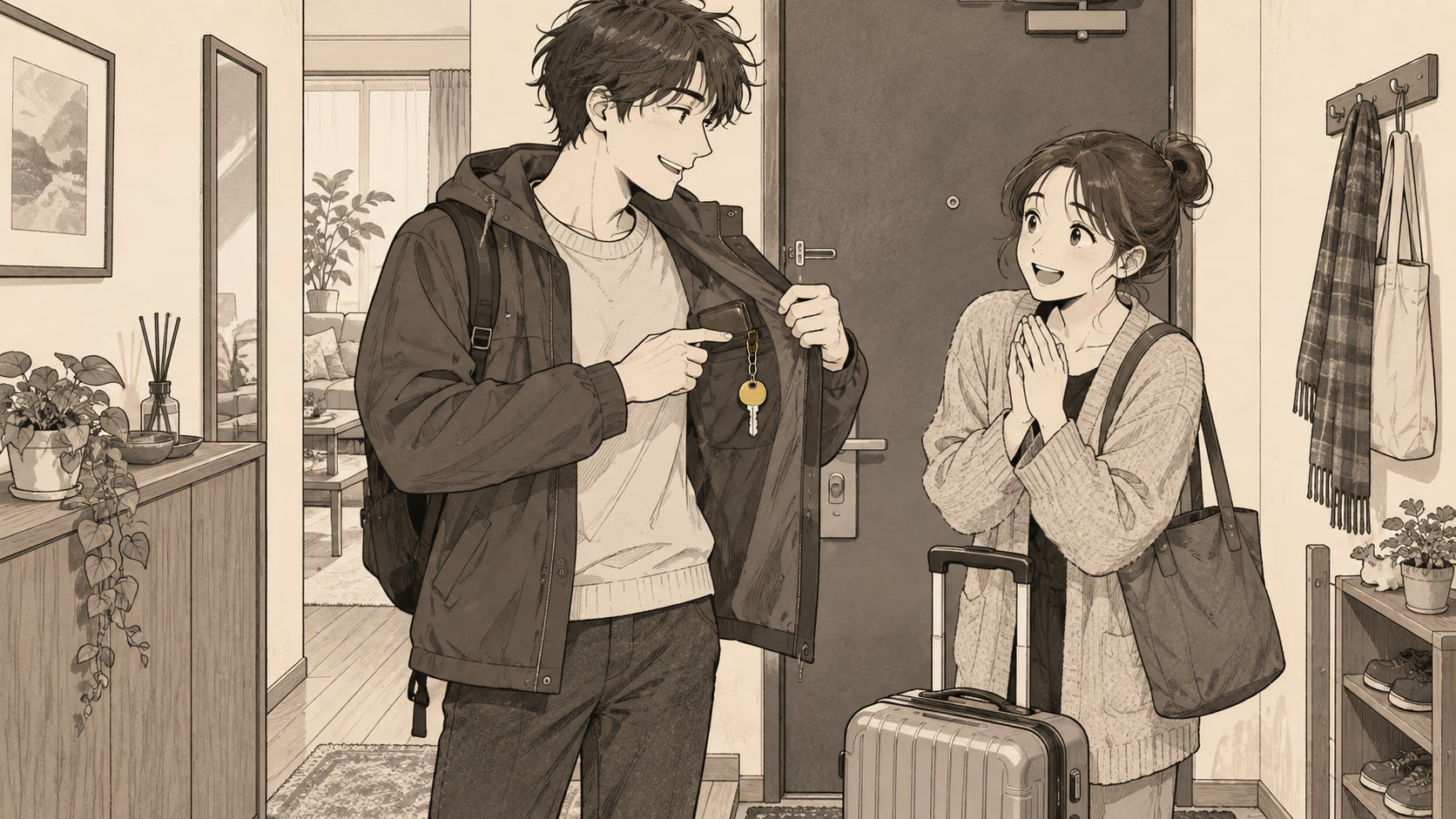
Illustration: In the entrance of a Japanese apartment, a traveler opens an inner jacket pocket to reassure their partner that the house key is safely with them. The key remains attached to a short cord clipped inside the pocket, clearly under the traveler’s control.

JLPT N1suru verbLevel estimated by Bebop

所しょ持じ

shoji

to possess, to carry

Often refers to something kept on one’s person. Note written by AI.

Example sentences

  1. 海外かいがいへ行いくのならパスポートの所持しょじが必要ひつようです。

    If you are going abroad, it’s necessary to have a passport.

    Tatoeba · CC BY 2.0 FR · Source

  2. 所持しょじ金きんはいくらありますか。

    How much money do you have with you?

    Tatoeba · CC BY 2.0 FR · Source

  3. 彼かれの所持しょじ品ひんは全部ぜんぶあの箱はこに入はいっている。

    All his possessions are contained in that box.

    Tatoeba · CC BY 2.0 FR · Source

Kanji in 所持

  • 所place; extentOnショKunところ・どころ・とこ
  • 持hold; haveOnジKunもつ・もてる

A word like this on every new tab

The Bebop Chrome extension shows one illustrated Japanese word each time you open a new tab in Chrome, with its reading, meaning, kanji and three example sentences. Choose any mix of levels from N5 to beyond N1. It’s free, with no account.

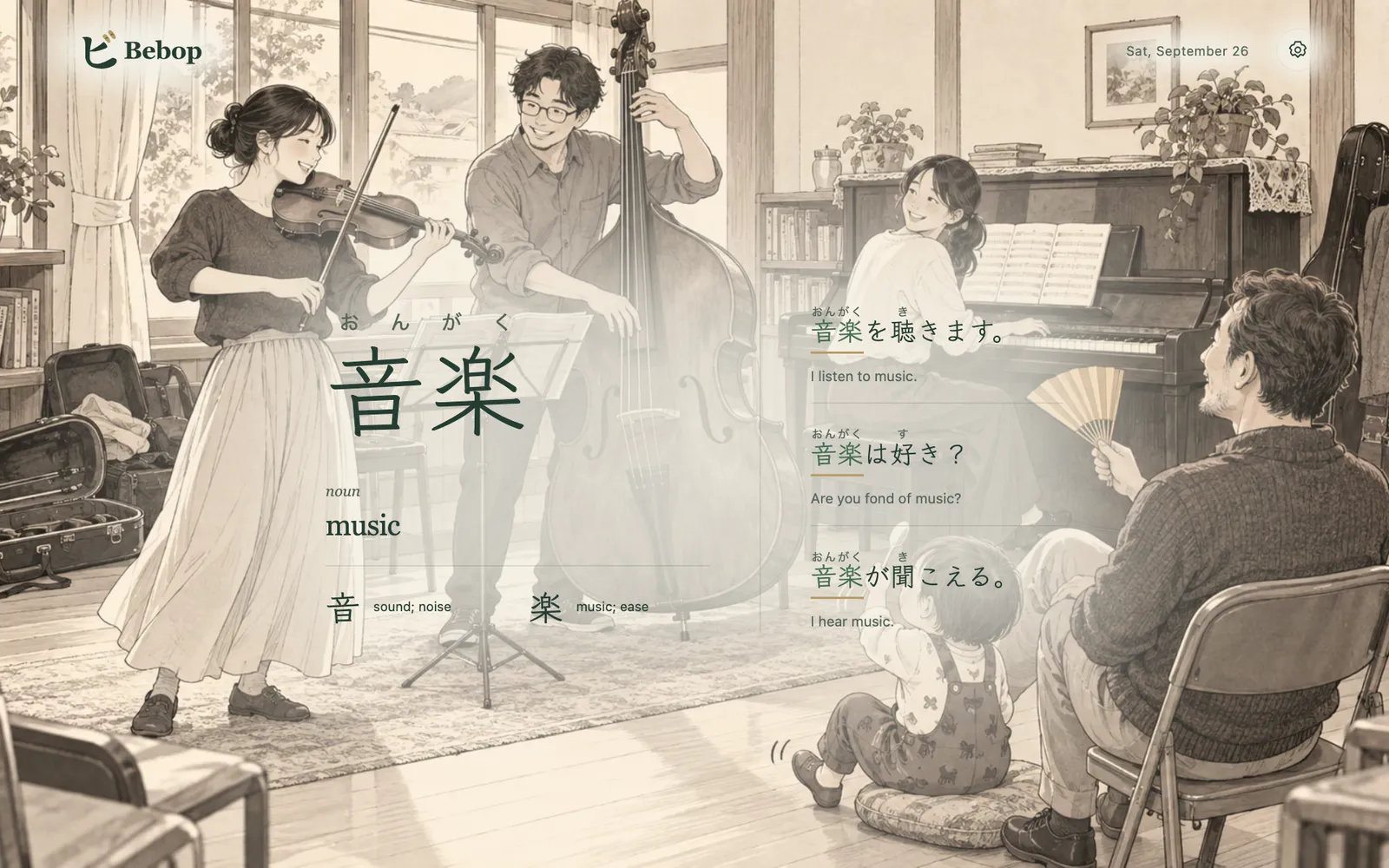
The Bebop new tab showing 音楽, music, over an illustration of a family playing music at home, with three example sentences
Add to Chrome Free on the Chrome Web Store
For Chrome on a computer. See it on the Chrome Web Store