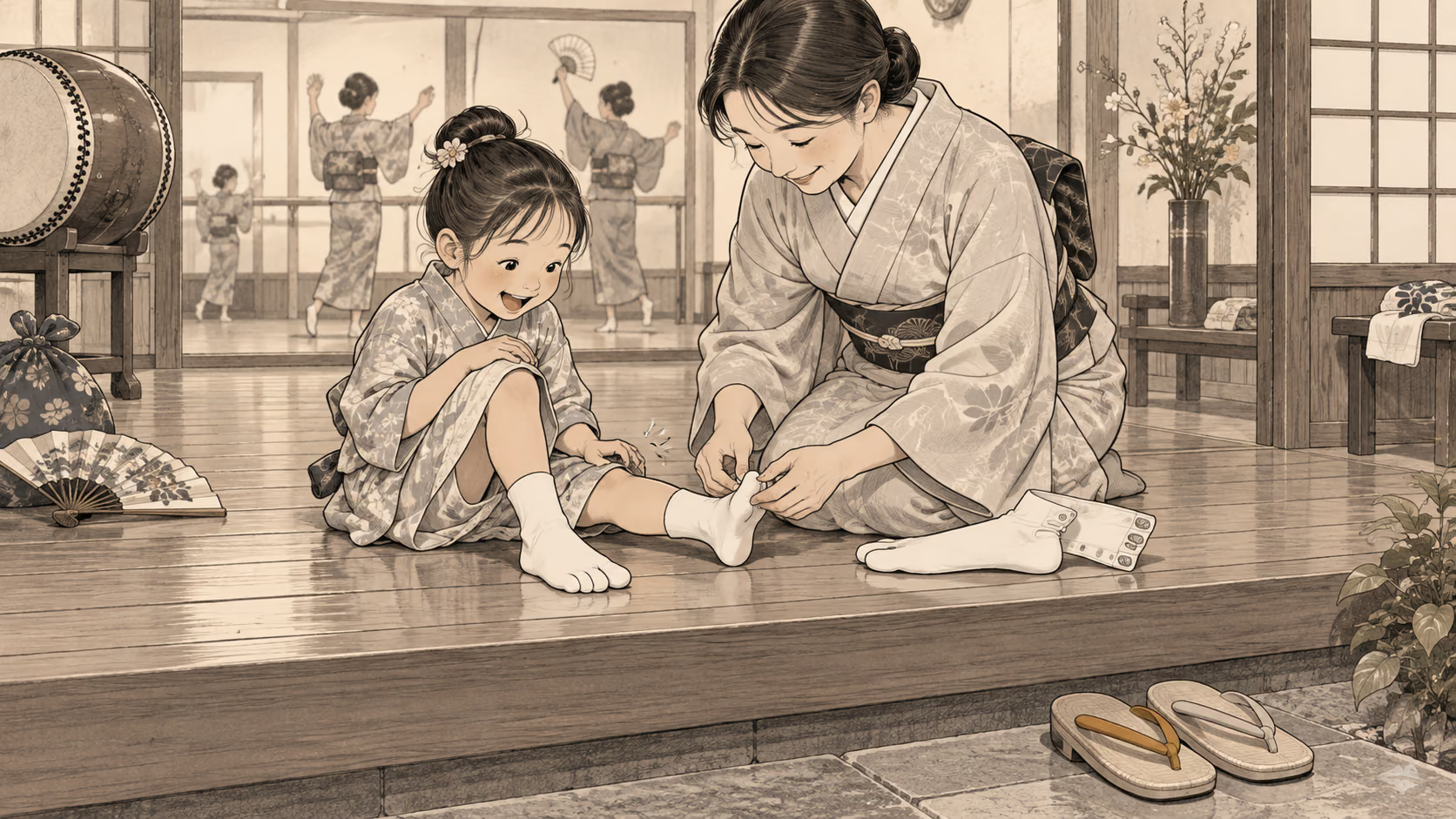
Illustration: On the raised wooden floor of a traditional dance rehearsal room, an adult dancer kneels to fasten a child’s tabi at the ankle. One completed foot rests sideways, clearly showing the separate big-toe compartment, the remaining toes together, and the firm sole.

Beyond N1nounLevel estimated by Bebop

足袋たび

tabi

traditional split-toe socks

Example sentences

  1. 足袋たびは表生地おもてきじ/裏生地うらきじ/底生地そこきじの3種類しゅるいの生地きじからなる。

    Tabi are made of cloths of three kinds: a surface cloth, a back cloth, and a sole cloth.

    KFTT corpus (NICT), Wikipedia · CC BY-SA 3.0 · Source

  2. 織物おりもので作つくられている足袋たびはセンチきざみでサイズが設定せっていされている。

    The size of the tabi made of textile changes every one centimeter.

    KFTT corpus (NICT), Wikipedia · CC BY-SA 3.0 · Source

  3. こうしたことを理由りゆうとして黒くろ足袋たびを嫌きらう人ひとも多おおい。

    Because of such backgrounds, there are many who dislike wearing black tabi.

    KFTT corpus (NICT), Wikipedia · CC BY-SA 3.0 · Source

Kanji in 足袋

  • 足leg; footOnソクKunあし・たりる・たる
  • 袋sack; bagOnタイ・ダイKunふくろ

A word like this on every new tab

The Bebop Chrome extension shows one illustrated Japanese word each time you open a new tab in Chrome, with its reading, meaning, kanji and three example sentences. Choose any mix of levels from N5 to beyond N1. It’s free, with no account.

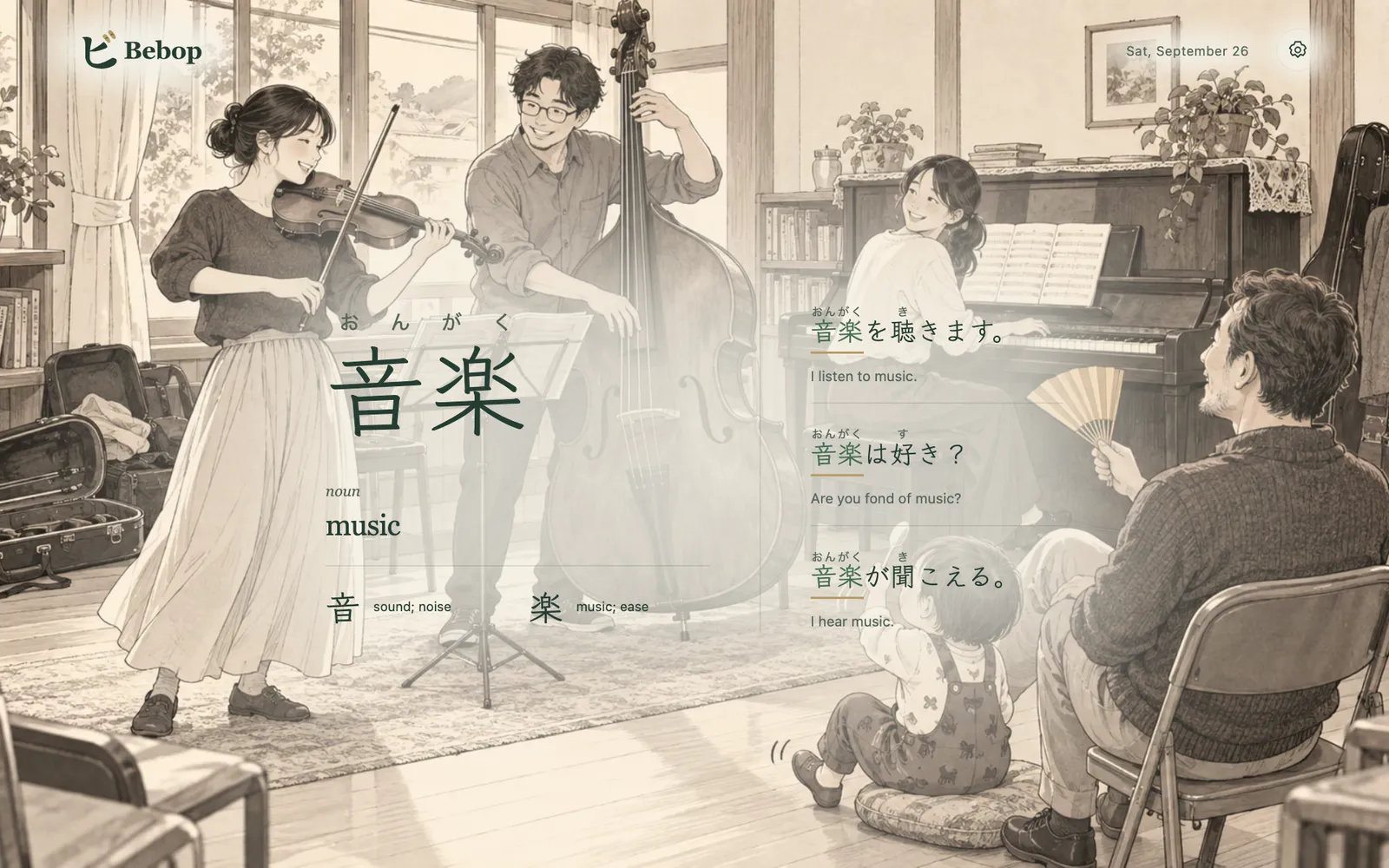
The Bebop new tab showing 音楽, music, over an illustration of a family playing music at home, with three example sentences
Add to Chrome Free on the Chrome Web Store
For Chrome on a computer. See it on the Chrome Web Store