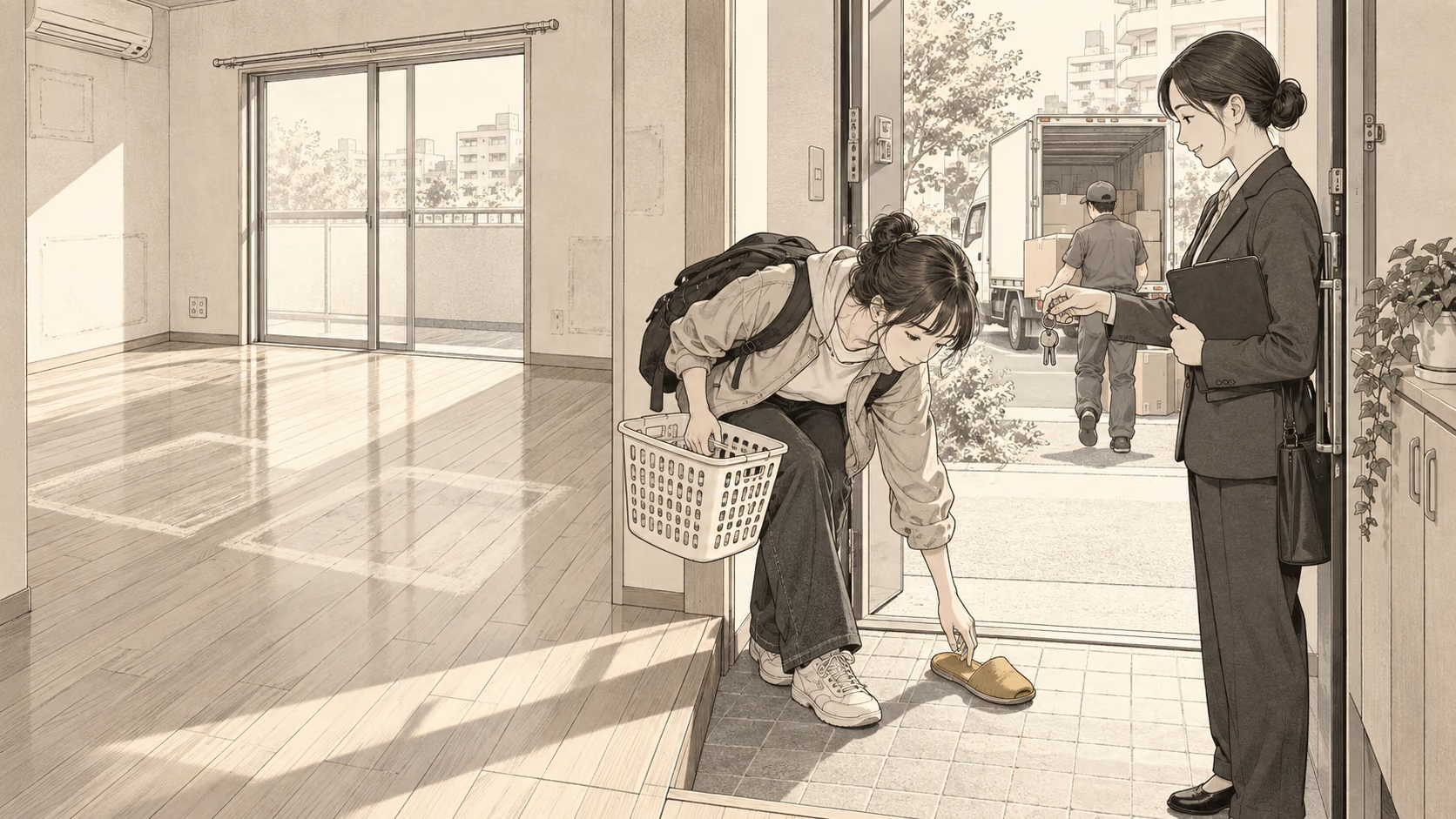
Illustration: At the open door of a completely emptied Japanese rental apartment, a former tenant hands the keys to the property manager. Beyond them, clean floors, bare curtain rails, and faint furniture impressions show that all possessions have been removed.

JLPT N1suru verbLevel estimated by Bebop

退たい去きょ

taikyo

to leave, to vacate

Usually means leaving or vacating a place. Note written by AI.

Example sentences

  1. 入寮期間にゅうりょうきかんは1年ねんまたは2年ねんで、夏季休暇時かききゅうかじは短期留学生受たんきりゅうがくせいうけ入いれのため退去たいきょしなければいけない。

    The term for staying in the dormitory is one or two years, and students have to move out during summer vacation in order to accommodate short term exchange students.

    KFTT corpus (NICT), Wikipedia · CC BY-SA 3.0 · Source

  2. ただし、1917年ねんには全員ぜんいんが村むらを退去たいきょした。

    However, in 1917 every resident including such resistant had left the village after all.

    KFTT corpus (NICT), Wikipedia · CC BY-SA 3.0 · Source

  3. なおこの頃ころ、織田有楽斎おだうらくさいは豊臣家とよとみかに見切みきりを付つけて、大坂城おおさかしろを退去たいきょしている。

    About that time Yurakusai ODA, abandoning the Toyotomi Family, left Osaka-jo Castle.

    KFTT corpus (NICT), Wikipedia · CC BY-SA 3.0 · Source

Kanji in 退去

  • 退retreat; withdrawOnタイKunしりぞく・しりぞける・ひく
  • 去leave; pastOnキョ・コKunさる

A word like this on every new tab

The Bebop Chrome extension shows one illustrated Japanese word each time you open a new tab in Chrome, with its reading, meaning, kanji and three example sentences. Choose any mix of levels from N5 to beyond N1. It’s free, with no account.

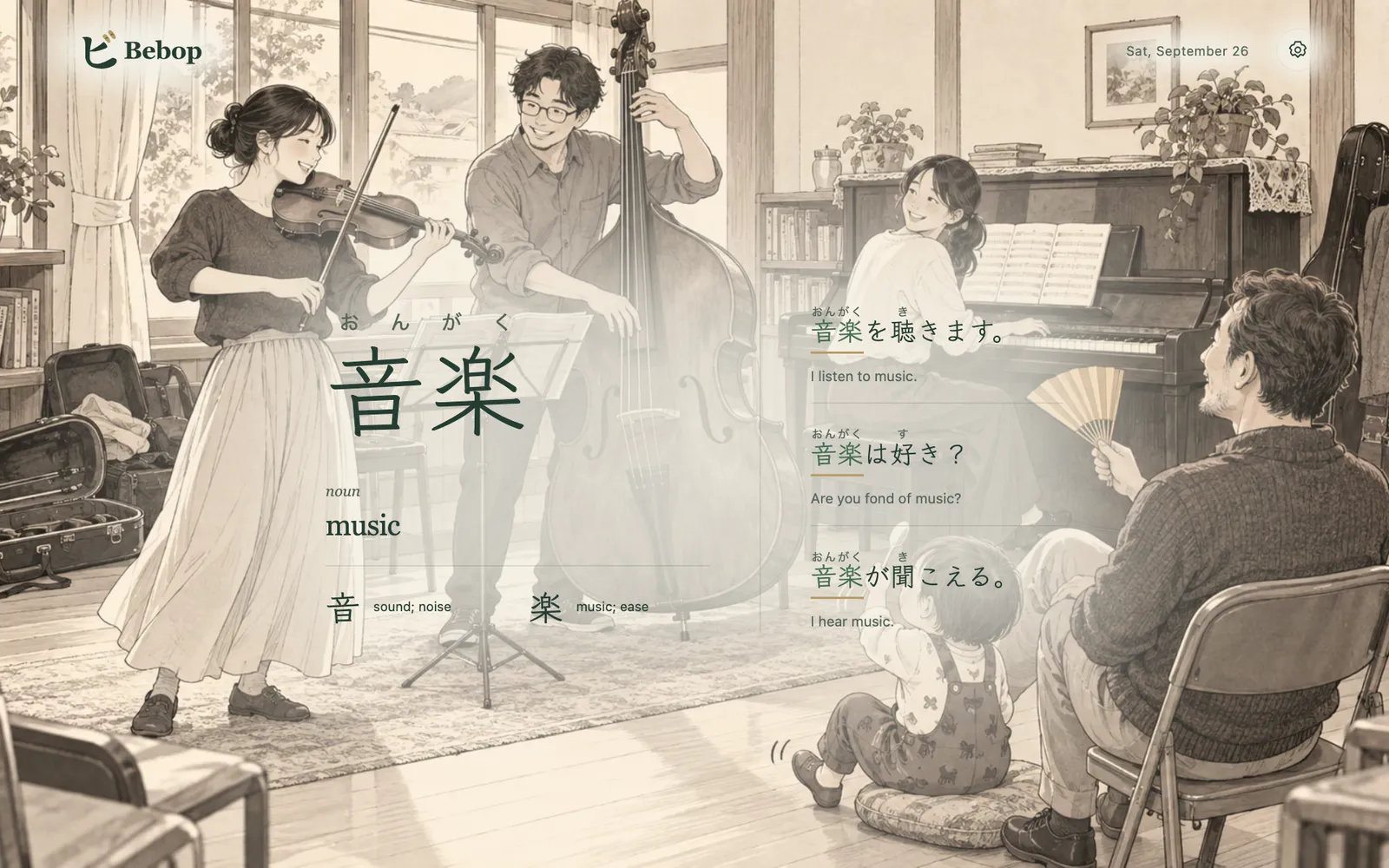
The Bebop new tab showing 音楽, music, over an illustration of a family playing music at home, with three example sentences
Add to Chrome Free on the Chrome Web Store
For Chrome on a computer. See it on the Chrome Web Store