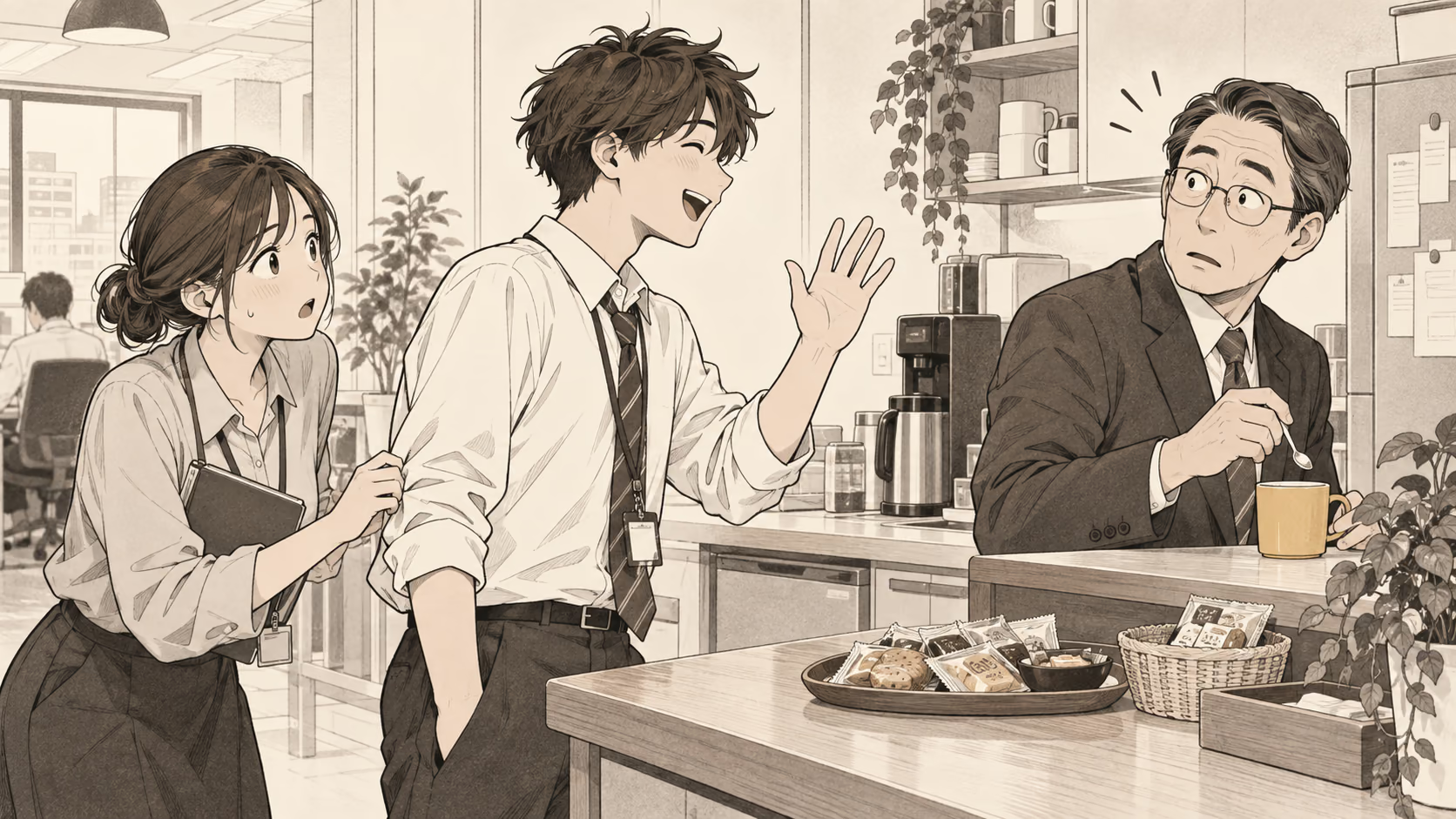
Illustration: In a small office kitchenette, a newly arrived junior employee casually calls directly to an older department manager across the counter, mouth open mid-address and one hand lifted in easy familiarity. The manager turns with a startled expression, a teaspoon suspended above their cup.

JLPT N1nounLevel estimated by Bebop

呼よび捨すて

yobisute

addressing someone without an honorific

It can sound rude unless the people are close. Note written by AI.

Example sentences

  1. なんて呼よべばいい?呼よび捨すてでいいよ。

    What should I call you? Just call me by my first name (no honorifics).

    Wiktionary · CC BY-SA 4.0 · Source

  2. なお東海寺とうかいじでは禅師ぜんじの名なを呼よび捨すてにするのは非礼ひれいであるという考かんがえから、『百本ひゃっぽん』という呼よび名なを用もちいている。

    At Tokai-ji, they use the name “Hyappon” because they consider it disrespectful to refer to the Zen master by name without an honorific.

    KFTT corpus (NICT), Wikipedia · CC BY-SA 3.0 · Source

  3. 初対面しょたいめんの人ひとを呼よび捨すてにするのは失礼しつれいだ。

    It’s rude to address someone you’ve just met without an honorific.

    Written by AI for Bebop

Kanji in 呼捨

  • 呼call; call out toOnコKunよぶ
  • 捨discard; throw awayOnシャKunすてる

A word like this on every new tab

The Bebop Chrome extension shows one illustrated Japanese word each time you open a new tab in Chrome, with its reading, meaning, kanji and three example sentences. Choose any mix of levels from N5 to beyond N1. It’s free, with no account.

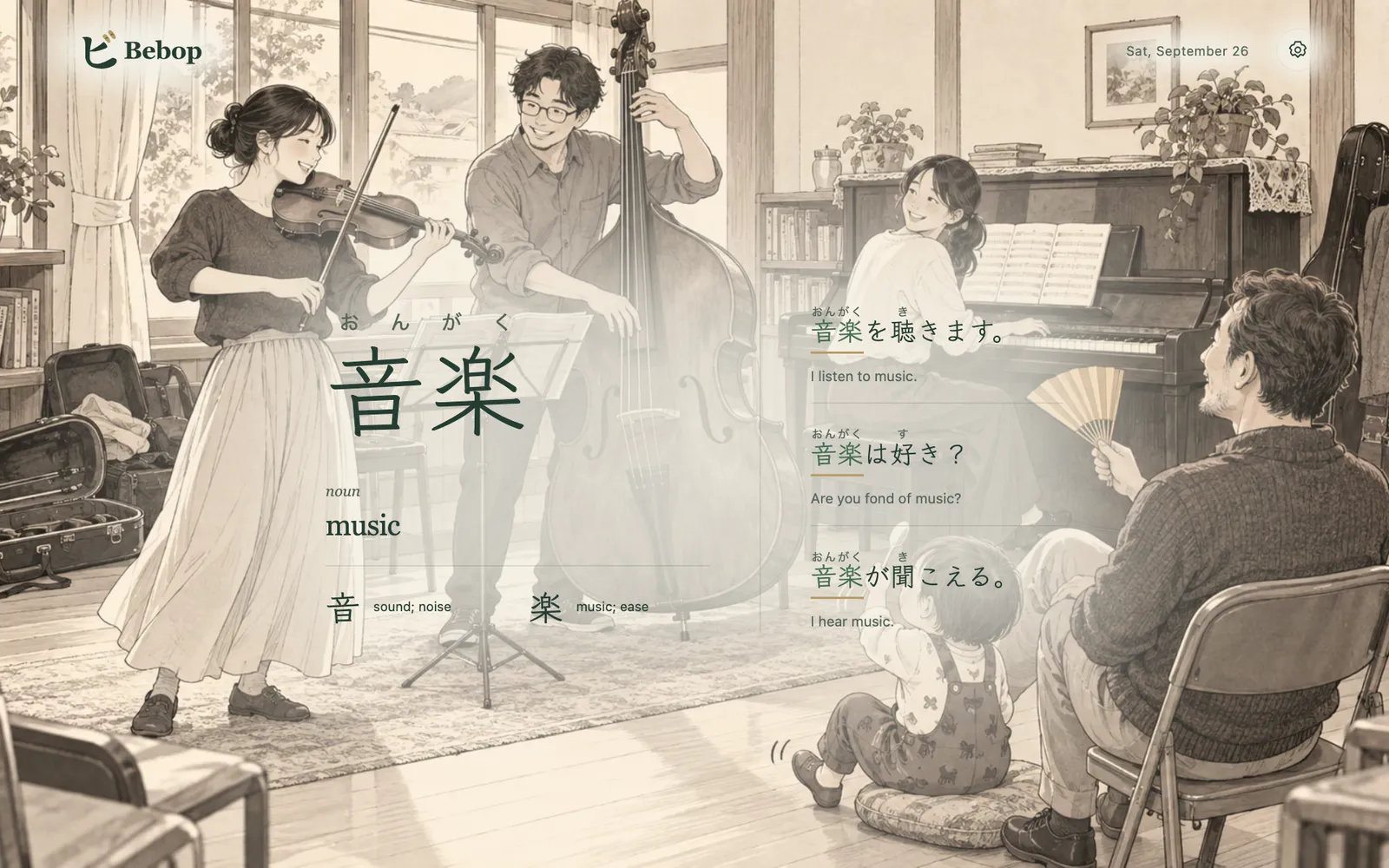
The Bebop new tab showing 音楽, music, over an illustration of a family playing music at home, with three example sentences
Add to Chrome Free on the Chrome Web Store
For Chrome on a computer. See it on the Chrome Web Store