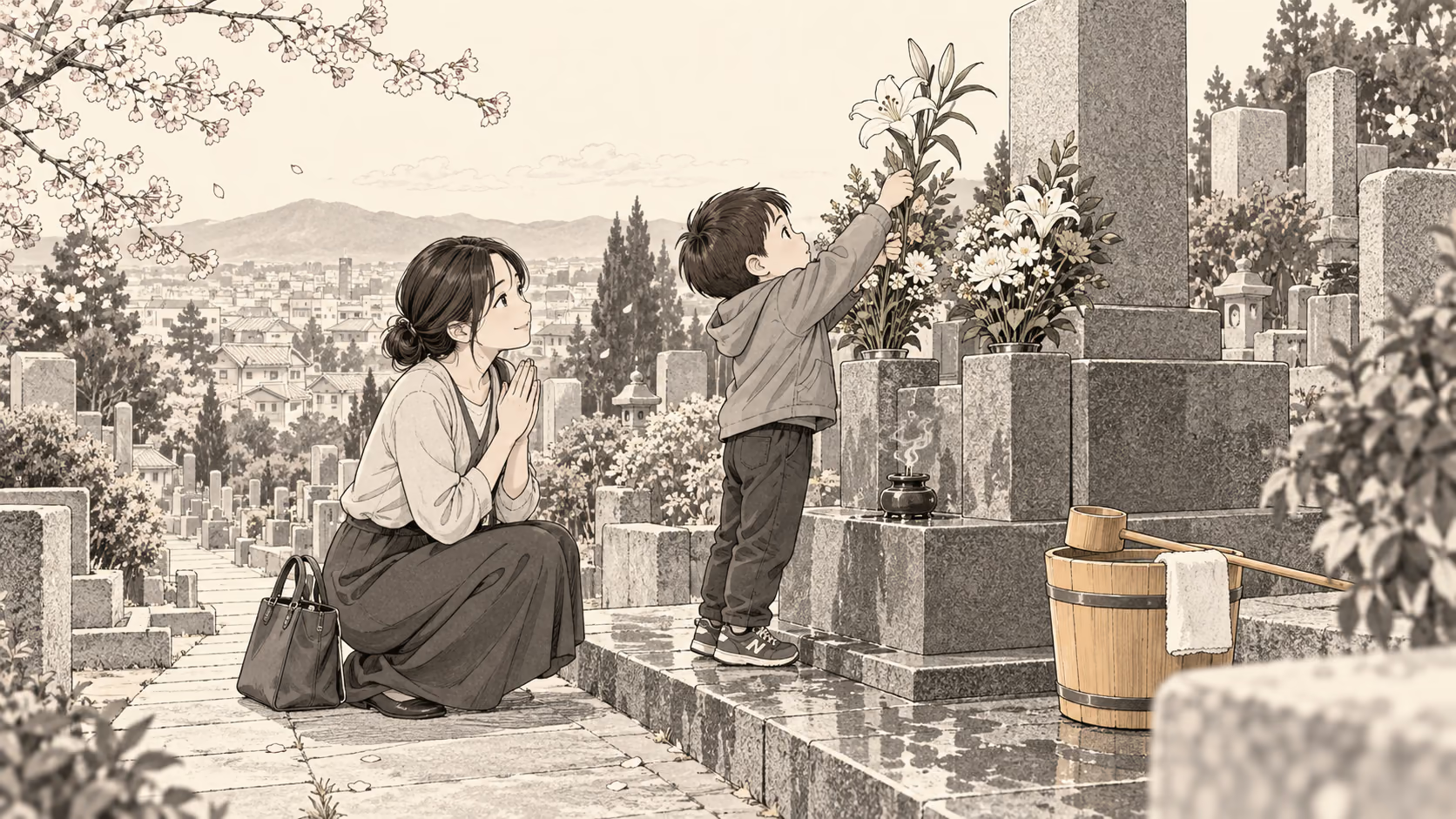
Illustration: At a family grave in a neighborhood cemetery, a woman kneels with her hands joined while her young son carefully places fresh flowers in a stone vase. A wooden water bucket and ladle sit beside the recently washed grave, with a damp cloth folded on the rim.

JLPT N1suru verbLevel estimated by Bebop

墓はか参まいり

hakamairi

to visit a grave

Example sentences

  1. 私わたしは父ちちの墓参はかまいりをした。

    I visited my father’s grave.

    Tatoeba · CC BY 2.0 FR · Source

  2. 今日きょうは祖父そふのお墓参はかまいりに行いってきました。

    I went to visit my grandfather’s grave today.

    Tatoeba · CC BY 2.0 FR · Source

  3. お墓参はかまいりをする時ときは、掃除道具そうじどうぐも持もっていくといいね。

    It’s a good idea to bring cleaning equipment with you when you go to visit a grave.

    Tatoeba · CC BY 2.0 FR · Source

Kanji in 墓参

  • 墓grave; tombOnボKunはか
  • 参nonplussed; three (in documents)Onサン・シンKunまいる・まい-・まじわる
A word like this on every new tab

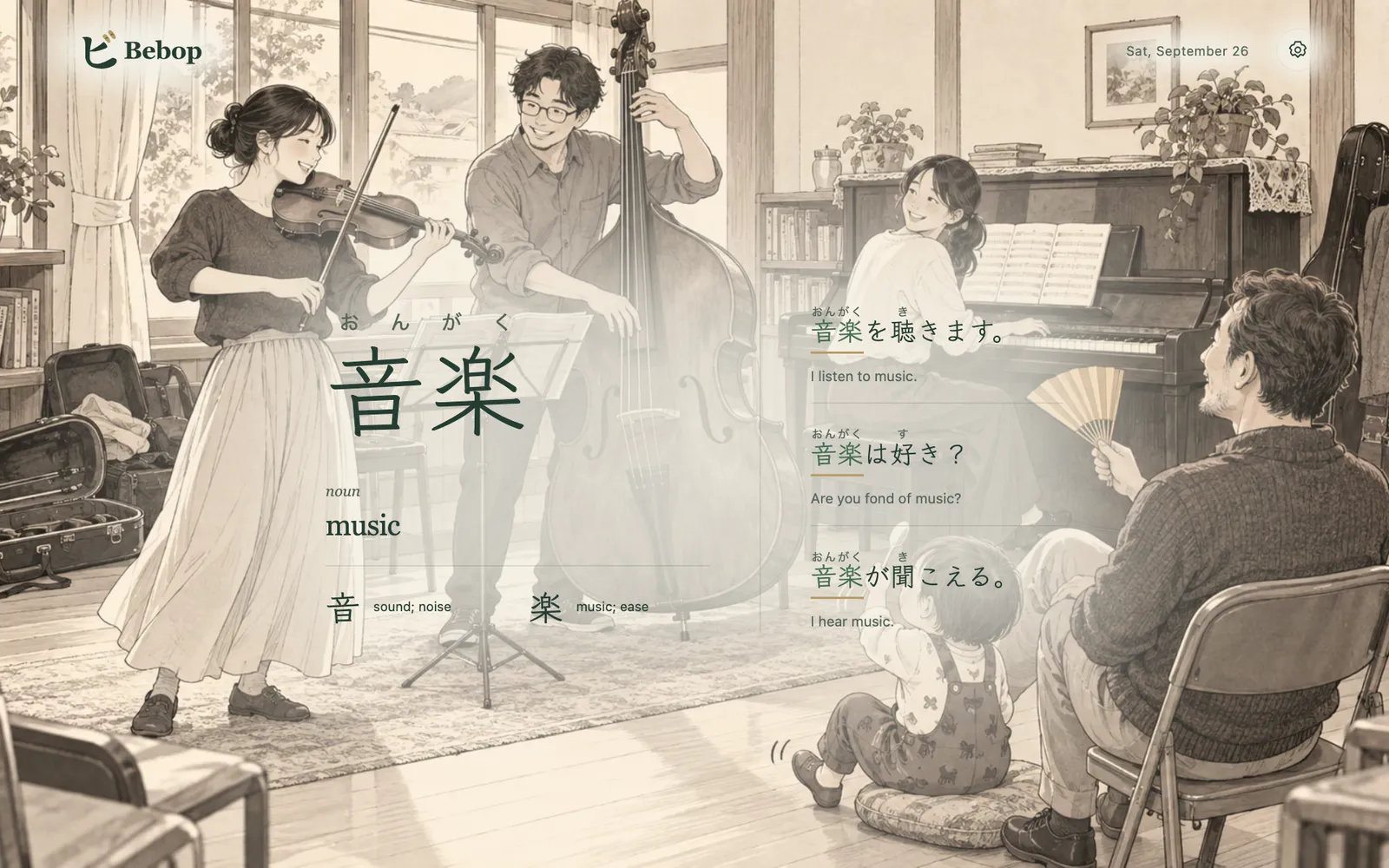
The Bebop Chrome extension shows one illustrated Japanese word each time you open a new tab in Chrome, with its reading, meaning, kanji and three example sentences. Choose any mix of levels from N5 to beyond N1. It’s free, with no account.

The Bebop new tab showing 音楽, music, over an illustration of a family playing music at home, with three example sentences
Add to Chrome Free on the Chrome Web Store
For Chrome on a computer. See it on the Chrome Web Store